







What's Happening?
Chinese electric vehicle (EV) manufacturers are significantly outpacing their U.S. counterparts in terms of overseas investments, according to industry analysts. This trend is attributed to China's saturated domestic market, which has prompted companies
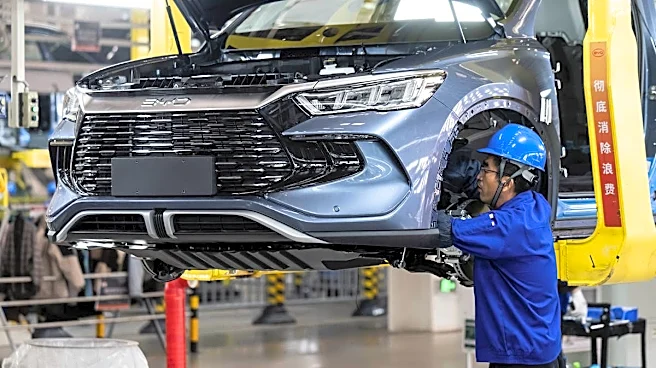
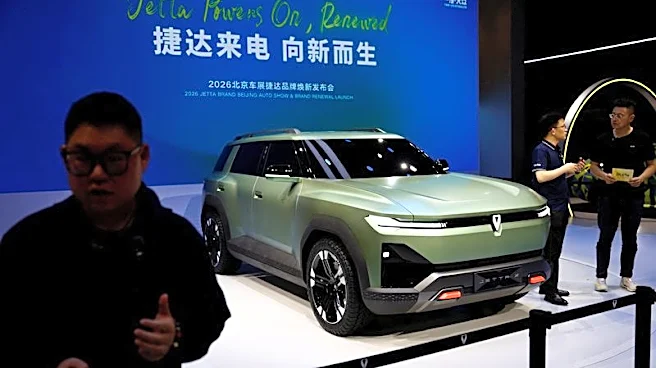
to seek opportunities abroad. Chinese automakers, such as BYD, are expanding their global footprint by investing in and building factories on multiple continents. Analysts suggest that this expansion is positioning Chinese companies as dominant players in the global EV market, potentially surpassing traditional American automakers like General Motors and Ford. Data from Atlas Public Policy indicates that Chinese companies announced nearly $101 billion in overseas EV and battery investments from 2019 to 2025, compared to just over $38 billion by U.S. companies. The shift in investment patterns is partly driven by strong international demand for affordable EVs and trade barriers that encourage Chinese manufacturers to establish local production facilities.
Why It's Important?
The growing dominance of Chinese EV manufacturers in global markets poses a significant challenge to U.S. automakers, potentially impacting their competitiveness and market share. As Chinese companies establish a strong presence in key international markets, they benefit from economies of scale and long-term investments, making it increasingly difficult for American companies to compete. This shift could lead to a realignment of the global automotive industry, with Chinese firms emerging as leaders in the EV sector. The trend also highlights the importance of strategic international investments and the need for U.S. automakers to adapt to changing market dynamics. Additionally, the expansion of Chinese EVs into global markets could influence trade policies and economic relations between countries, as nations may implement tariffs or other measures to protect local industries.
What's Next?
As Chinese EV manufacturers continue to expand their global presence, U.S. automakers may need to reassess their international strategies to remain competitive. This could involve increasing their own overseas investments, forming strategic partnerships, or focusing on innovation to differentiate their products. Policymakers in the U.S. might also consider measures to support domestic automakers, such as incentives for EV production or research and development. The ongoing trade dynamics, including tariffs and market access negotiations, will likely play a crucial role in shaping the future landscape of the global EV industry. Stakeholders will need to monitor these developments closely to understand their potential impact on the U.S. automotive sector and broader economic interests.