




What's Happening?
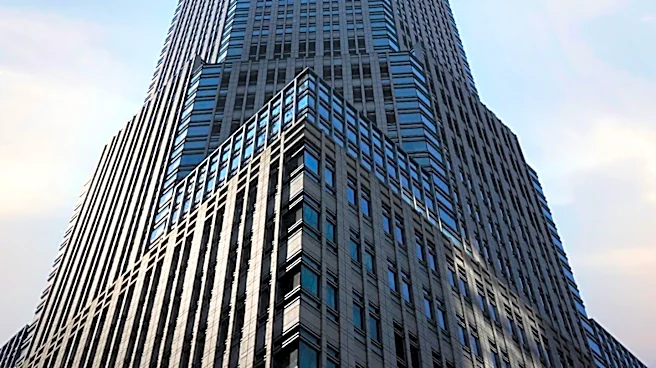
BankUnited, a Florida-based bank, has signed a retail lease for a new flagship branch on Fifth Avenue and expanded its office space at 450 Park Avenue in New York City. The retail lease is for 10,068 square feet at 10 Bryant Park, located on the south
corner of Amazon’s tower at 452 Fifth Avenue. This new branch is expected to open in 2027. Concurrently, BankUnited has added an entire 10,392-square-foot office floor and extended its lease on the second floor and mezzanine level at 450 Park Avenue, bringing its total footprint there to 27,392 square feet. These two transactions represent a long-term commitment of 37,460 square feet in Manhattan for the bank. Kim Mogull, founder and CEO of Mogull Realty, represented BankUnited in both deals. CBRE represented SL Green Realty, the owner of 450 Park Avenue, while JLL represented Property & Building Corporation (PBC), the owner of 10 Bryant Park.
Why It's Important?
This significant expansion by BankUnited underscores a continued confidence in New York City's commercial real estate market, particularly in prime locations like Fifth Avenue and Park Avenue. The move demonstrates a strategic commitment to strengthening its presence in a key financial hub, which is crucial for building commercial relationships and core deposits, as stated by Rajinder P. Singh, BankUnited’s chairman, president, and CEO. The investment in a new flagship retail branch and expanded office space suggests a long-term growth strategy, potentially leading to increased competition in the banking sector within the city. For the commercial real estate market, these leases, especially the long-term extension at 450 Park Avenue, signal stability and demand for high-quality office and retail spaces, benefiting landlords like SL Green Realty and Property & Building Corporation. This also reflects a broader trend of businesses re-committing to physical office spaces, even after the pandemic, indicating a belief in the value of in-person operations and client engagement.
What's Next?
BankUnited's new flagship branch at 10 Bryant Park is slated to open in 2027, which will likely be followed by a marketing push to attract new customers to its prominent Fifth Avenue location. The expanded office space at 450 Park Avenue will allow for increased operational capacity and potentially the hiring of more staff to support its growing commercial relationships in New York. The long-term nature of these leases suggests that BankUnited will continue to be a significant player in the city's financial landscape for the foreseeable future. For the owners of 10 Bryant Park, Property & Building Corporation (PBC), the lease with BankUnited adds a stable tenant, although PBC is also exploring a potential sale or recapitalization of the property. The asking rents for these prime locations, in the mid-$400s per square foot for retail and $135 per square foot for office, indicate the continued high value of Manhattan real estate, setting benchmarks for future transactions in the area.
Beyond the Headlines
The decision by BankUnited to expand its physical footprint in Manhattan, particularly with a new flagship branch, challenges the narrative of a complete shift to digital-only banking and remote work. It highlights the enduring importance of physical presence for certain sectors, especially in high-value commercial banking where client relationships often benefit from in-person interactions. This move could also be seen as a strategic play to enhance brand visibility and credibility in a competitive market. The investment in prime real estate, even with the availability of remote work options, suggests that for some institutions, a physical address in a prestigious location remains a crucial component of their corporate identity and client acquisition strategy. Furthermore, the ongoing upgrades to properties like 10 Bryant Park, including the rebranding and significant investments, reflect a broader effort by landlords to attract and retain high-caliber tenants by offering modern, amenity-rich spaces, signaling a continued evolution in the demands for commercial real estate.