






What's Happening?
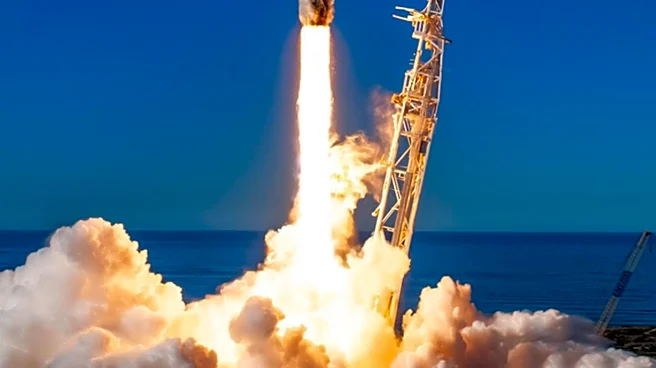
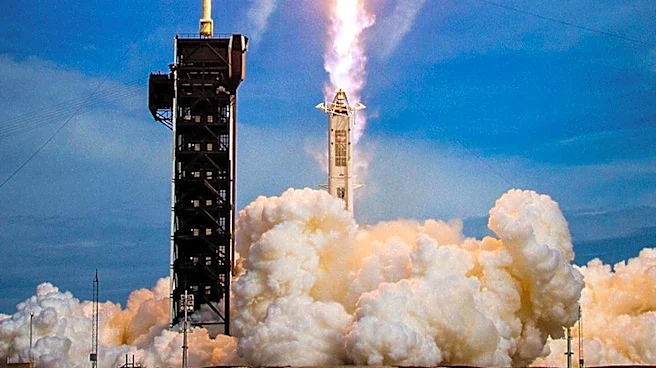
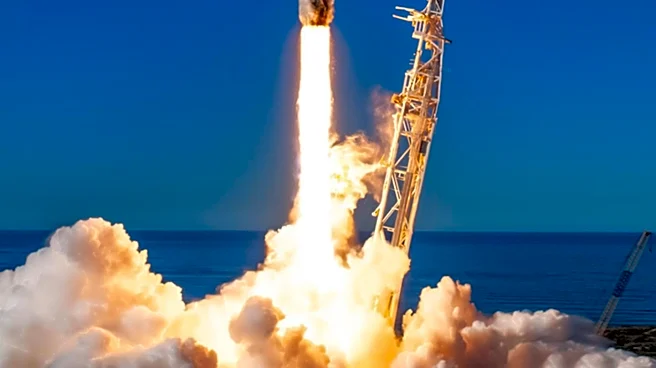
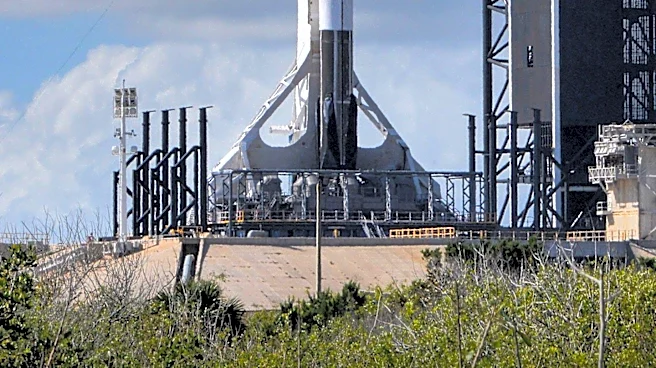
On June 28, 2026, SpaceX's Falcon 9 first stage, designated B1085, successfully launched a 15,400-pound SiriusXM broadcasting satellite from Cape Canaveral. This marked the seventeenth flight for the booster, which has previously supported missions including
NASA's Crew-9 and various Starlink deployments. The SXM-11 satellite reached its geosynchronous transfer orbit and will join SiriusXM's broadcasting fleet. The booster landed on a drone ship in the Atlantic, ready for refurbishment and future missions. This launch underscores SpaceX's capability in reusing rockets, significantly reducing launch costs.
Why It's Important?
The successful reuse of the Falcon 9 booster highlights SpaceX's leadership in the commercial space industry, offering a cost-effective alternative to traditional expendable rockets. This capability allows for more frequent launches, supporting a variety of missions from commercial to national security. The launch of SXM-11, the heaviest satellite for SiriusXM, ensures continued service and technological advancement in satellite radio. The ability to reuse boosters multiple times demonstrates the economic viability and sustainability of SpaceX's approach, setting a benchmark for the industry.
What's Next?
SpaceX plans to continue its high launch cadence, with future missions including more Starlink deployments and the launch of NASA's Nancy Grace Roman Space Telescope. The company aims to further extend the reuse capabilities of its boosters, potentially increasing the number of flights per booster. This ongoing innovation could lead to even lower costs and more accessible space missions. Meanwhile, competitors like Blue Origin face challenges in matching SpaceX's operational efficiency and reliability.