






What's Happening?
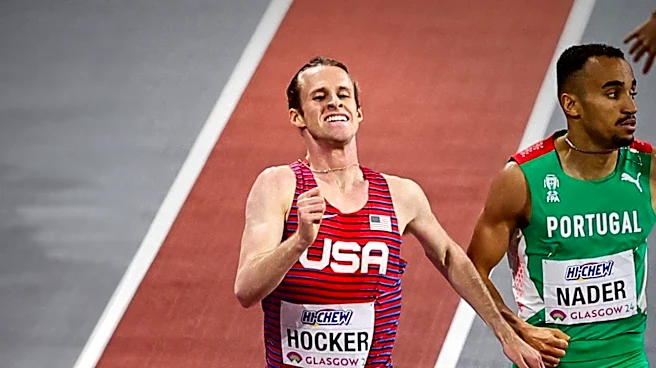
Cole Hocker, an American runner, has achieved significant recognition in the sport, being identified as the current world champion in the 5000m event for 2025 and an Olympic gold medalist in the 1500m from 2024. His Olympic victory in Paris saw him outperform
competitors, including Jakob Ingebrigtsen. Hocker's success is highlighted within the context of the American training methodology, which emphasizes individualized preparation and comprehensive support systems. Unlike the group-focused training in Kenya or the lactate-threshold-based approach in Norway, the U.S. system, often centered around university programs, provides athletes with tailored training regimens based on their individual physiological tolerance and access to advanced technology and a team of specialists. This includes experts in diet, sports psychology, strength conditioning, and various regeneration methods, ensuring a holistic approach to athlete development.
Why It's Important?
Cole Hocker's achievements underscore the effectiveness of the American individualized training approach in producing elite athletes on the global stage. His success in both the 1500m and 5000m events demonstrates the versatility and high-level performance capabilities fostered by this system. This model, characterized by its focus on personalized load management and extensive support staff, allows athletes to maximize their potential while minimizing injury risks. The emphasis on mental preparation, where athletes are driven by a strong desire to win, further contributes to their competitive edge. This success could influence future investment and development strategies within U.S. sports programs, potentially leading to more resources allocated to individualized training, advanced technology, and specialized support teams to cultivate future champions.
What's Next?
Hocker's continued performance will likely serve as a benchmark for American middle-distance running. His status as a world champion and Olympic gold medalist will undoubtedly inspire a new generation of U.S. athletes and potentially attract more talent to collegiate and professional running programs that adopt similar individualized training philosophies. The success of the American model, as exemplified by Hocker, may also prompt other nations to re-evaluate their training strategies, possibly leading to a global shift towards more personalized and scientifically supported athletic development. Future competitions will be crucial in demonstrating the sustained impact of this approach and Hocker's ability to maintain his top-tier performance.
Beyond the Headlines
The success of Cole Hocker and the American training model highlights a broader trend in elite sports: the increasing reliance on scientific data, personalized analytics, and a multidisciplinary support team. This shift moves beyond traditional, more generalized training methods towards a highly tailored approach that considers each athlete's unique physiological and psychological profile. This could lead to ethical considerations regarding access to such advanced resources, potentially widening the gap between well-funded programs and those with limited budgets. Furthermore, the intense focus on individual performance and the 'second place is the first loser' mentality could place immense psychological pressure on athletes, necessitating robust mental health support systems within these programs.