



What's Happening?
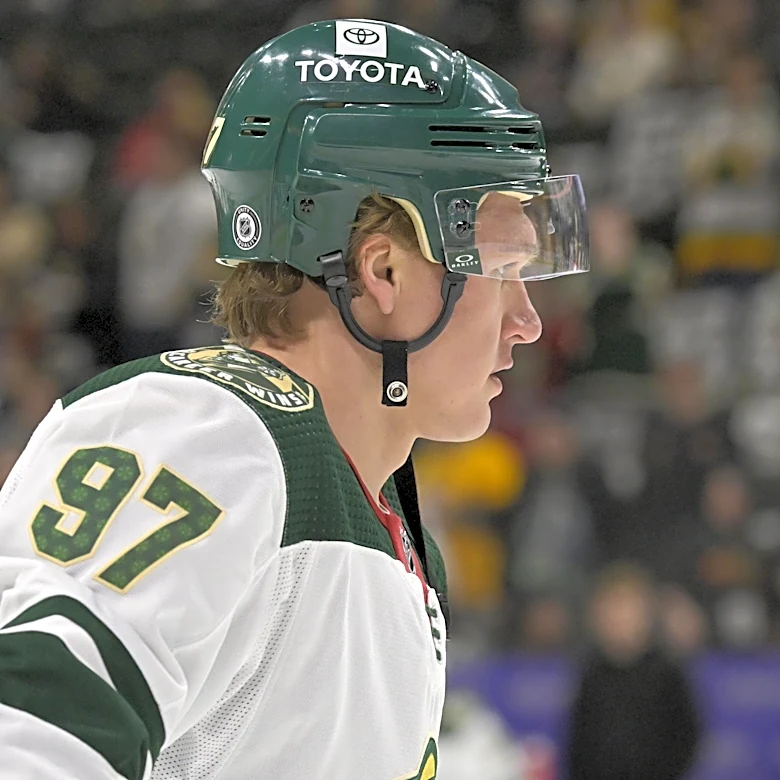
Minnesota Wild General Manager Bill Guerin has indicated that defenseman Quinn Hughes could remain with the team past the NHL Trade Deadline on March 1, even if a new contract is not signed. Hughes, acquired from the Vancouver Canucks on December 12,
2025, is in the final year of a six-year, $47.1 million contract. He has been eligible to sign a new deal with the Wild since July 1, but the situation remains at 'status quo,' according to Guerin. If Hughes does not sign by June 30, he will become an unrestricted free agent. Guerin expressed his desire for Hughes to focus on hockey and stated that the team is better with Hughes, regardless of the contract situation. Hughes, a Norris Trophy winner in 2024, has recorded 79 points (11 goals, 68 assists) in 67 games since joining the Wild, placing him second on the team and among NHL defensemen in that period.
Why It's Important?
The decision regarding Quinn Hughes's future has significant implications for the Minnesota Wild's competitive standing and long-term strategy. Retaining a player of Hughes's caliber, a Norris Trophy winner and a top-performing defenseman, would bolster the team's immediate chances in the Central Division, which they currently lead. However, keeping him without a new contract carries the risk of losing him as an unrestricted free agent for no return, potentially impacting future asset management. For Hughes, the situation presents a strategic choice between securing a long-term deal with the Wild or exploring free agency, where he could command a substantial contract from other NHL teams. The outcome will influence the Wild's salary cap flexibility and their ability to acquire or retain other key players, affecting the team's competitive window and financial health.
What's Next?
The immediate focus for Quinn Hughes will be on his performance on the ice as the NHL Trade Deadline approaches on March 1. General Manager Bill Guerin's willingness to keep Hughes past the deadline suggests a potential high-stakes gamble, hoping to either secure a contract extension or maximize the team's performance for the current season. If no contract is reached by June 30, Hughes will become an unrestricted free agent, opening the door for other NHL teams to pursue him. The Wild will need to weigh the benefits of retaining a star player for a playoff push against the risk of losing him without compensation. The situation could also influence other teams' trade strategies, as they monitor whether Hughes becomes available or signs an extension.
Beyond the Headlines
The ongoing contract negotiations between Quinn Hughes and the Minnesota Wild highlight a broader trend in professional sports where star players hold significant leverage, especially as they approach unrestricted free agency. This scenario underscores the complex balance between team competitiveness, financial prudence, and player autonomy. The Wild's decision to potentially keep Hughes without a long-term deal reflects a strategic choice to prioritize immediate on-ice success, even if it means a higher risk of losing a valuable asset. This approach can be seen as a calculated move to maximize the team's current competitive window, but it also sets a precedent for future contract negotiations and player retention strategies within the league. The outcome will be closely watched by other NHL franchises and players, as it could influence future contract dynamics and trade deadline decisions across the sport.