
What's Happening?
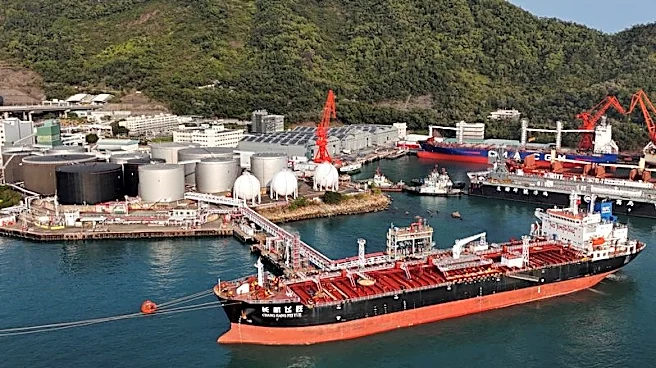
U.S. Gulf Coast refiners have significantly increased their share of global diesel trade, reaching 22% in 2026, up from 17% in 2025. This surge, amounting to 1.3 million barrels per day (b/d) out of a total
of 5.97 million b/d, with November flows nearing 25%, is a direct response to a global refined-products shortage. According to S&P Global, this shortage was exacerbated by a February 28 Israel-U.S. attack on Iran, which disrupted crude supply, and Ukrainian strikes that incapacitated approximately half of Russia's refining capacity. ExxonMobil CEO Darren Woods estimates that about one-third of the global shortage is due to the inability to transport clean products from the Middle East, while Russia has transitioned from a net diesel exporter to a net importer. U.S. refiners, including Marathon at 100% utilization and Chevron at 98% with a 46% distillate yield, are operating near capacity to fill this supply gap, with inventories remaining 9–14% below seasonal norms.
Why It's Important?
The increased role of U.S. Gulf Coast refiners in the global diesel market underscores the critical importance of domestic refining capacity in stabilizing international energy supplies during geopolitical disruptions. This shift benefits U.S. refiners by increasing demand for their products and potentially boosting revenues. However, it also highlights the vulnerability of global energy markets to regional conflicts and infrastructure attacks, which can rapidly alter trade flows and create supply deficits. For U.S. consumers and industries, this increased export activity could lead to tighter domestic supplies or upward pressure on diesel prices, impacting transportation costs and various sectors reliant on diesel fuel. The situation also emphasizes the strategic value of U.S. energy independence and its capacity to act as a swing producer in times of crisis.
What's Next?
S&P Global Energy forecasts that U.S. diesel exports will continue to rise, reaching 1.39 million b/d in 2027, as Middle East product exports remain at about half of pre-war levels and Russian outages persist. U.S. Gulf Coast refiners are expected to maintain high utilization rates, with relatively light Q4 maintenance schedules for several operators. The ongoing geopolitical tensions in the Middle East and Eastern Europe will continue to influence global supply chains and demand for refined products. Stakeholders will closely monitor these developments, as sustained shortages could lead to further price volatility and necessitate strategic adjustments in energy policy and trade relations. The long-term implications for global energy security and the role of U.S. refiners will depend on the resolution of these international conflicts.
Beyond the Headlines
This situation reveals the intricate interconnectedness of global energy markets and the cascading effects of geopolitical events. The disruption of refining capacity in one region can create significant opportunities and pressures in others, highlighting the strategic importance of energy infrastructure. Beyond immediate economic impacts, the reliance on U.S. refiners to fill global supply gaps could influence international relations, potentially strengthening the U.S.'s position as a key energy provider. It also brings to light the environmental considerations associated with increased refining activity and fossil fuel exports, potentially creating tension between energy security needs and climate goals. The long-term sustainability of such high utilization rates and the potential for future supply shocks remain critical considerations for policymakers and industry leaders.