


What's Happening?
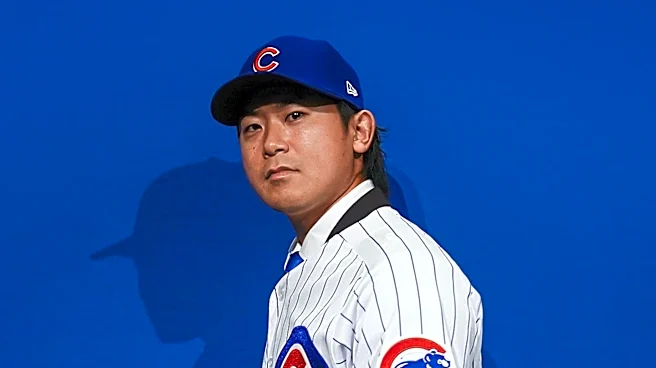
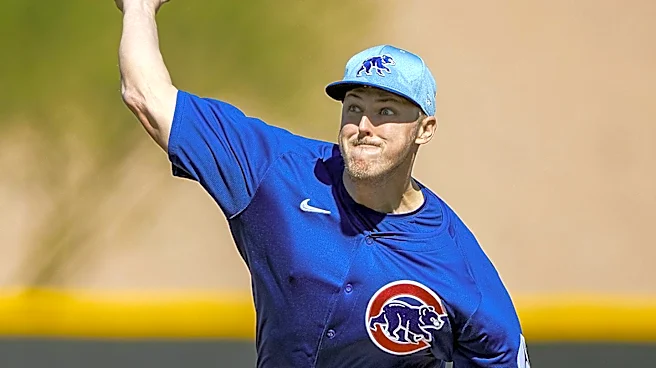
The Chicago Cubs are reportedly considering a reunion with veteran pitcher Clay Holmes for the 2027 season, as confirmed by GM Carter Hawkins at the GM Meetings. Holmes, known for his high groundball rate (60.7% in 2026 and 62.3% career), is seen as a good
fit for the Cubs' strong infield defense. Despite a mixed performance in 2026 with the Cubs, including a dominant August (1.55 ERA) followed by a struggling September (4.25 ERA), the team views him as a potential asset. His September struggles were partly attributed to the absence of Dansby Swanson due to injury, though Holmes's walk-to-strikeout ratio that month also raised concerns.
Why It's Important?
The Cubs' interest in Clay Holmes highlights their strategic approach to bolstering their pitching rotation, focusing on pitchers who complement their defensive strengths. Holmes's ability to induce ground balls is particularly valuable for a team with elite infielders, potentially reducing extra-base hits and runs. However, his inconsistent performance and low strikeout-minus-walk percentage since becoming a starter in 2025 suggest he may not be a top-tier ace. This indicates the Cubs are likely looking for Holmes to be a solid secondary addition rather than a frontline starter, reflecting a nuanced understanding of his capabilities and limitations within their overall pitching strategy.
What's Next?
While Holmes is on the Cubs' radar, he is not expected to be their primary offseason pitching acquisition. The team is exploring other options for front-end starters, including potential trades for pitchers like Trevor Rogers, Freddy Peralta, Reid Detmers, or George Kirby. The Cubs' strategy appears to be building a well-rounded pitching staff, with Holmes potentially filling a role that leverages his groundball tendencies. The upcoming offseason will reveal how the Cubs balance their pursuit of Holmes with their broader goals of acquiring a top-tier starter to strengthen their rotation for the 2027 season.
Beyond the Headlines
The Cubs' pursuit of Clay Holmes, despite his recent inconsistencies, underscores the value placed on specific pitching attributes that align with a team's defensive strengths. This approach moves beyond simply looking at ERA or strikeout numbers and delves into how a pitcher's style interacts with the team's overall defensive scheme. It also reflects the ongoing challenge for MLB teams to find reliable pitching talent and the willingness to take calculated risks on players who might thrive in a specific team environment. The emphasis on groundball pitchers in an era of increasing home runs also highlights a counter-strategy to mitigate offensive power.