





What's Happening?
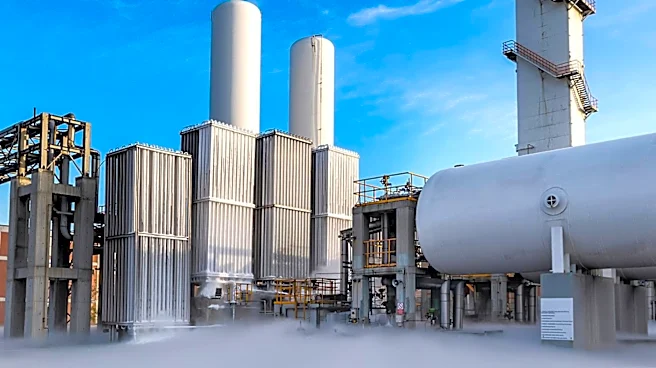
Cheniere Energy (NYSE:LNG) has received approval from the U.S. Federal Energy Regulatory Commission (FERC) for its Sabine Pass Liquefaction Stage 5 expansion project. This regulatory clearance authorizes the development of new liquefaction infrastructure
at the Sabine Pass facility, which is expected to significantly increase future liquefied natural gas (LNG) export capacity. The approval marks a crucial step for Cheniere Energy, moving the project past a key U.S. regulatory hurdle and closer to making final construction and contracting decisions. This expansion aligns with Cheniere's strategy of developing additional liquefaction trains at existing sites, a method considered less risky than building entirely new 'greenfield' facilities, which some competitors have pursued. The company's business model relies on leveraging its extensive, largely contracted LNG infrastructure to generate consistent cash flow, which then supports dividends, share buybacks, and new projects like the Sabine Pass Stage 5 expansion.
Why It's Important?
This FERC approval is significant for the U.S. energy sector and global LNG markets. Cheniere Energy is a major player in the U.S. LNG industry, with a market valuation of approximately $60.4 billion. The expansion of its Sabine Pass facility will enhance the nation's capacity to export natural gas, further solidifying the U.S. role as a key global energy supplier. Increased export capacity can help meet international demand for natural gas, potentially influencing global energy prices and supply dynamics. For Cheniere Energy, this approval reinforces its growth strategy, providing a clear path to expand its operational footprint and revenue streams. The project's progression from conceptualization to execution strengthens the company's long-term investment narrative, which is centered on utilizing large-scale, contracted infrastructure to ensure stable cash generation. This move also highlights the ongoing regulatory support for expanding U.S. energy infrastructure to meet both domestic and international energy needs.
What's Next?
With FERC approval secured, Cheniere Energy is now positioned to advance towards critical construction and contracting decisions for the Sabine Pass Liquefaction Stage 5 expansion. The next steps will involve securing long-term sales contracts for the additional LNG capacity and ensuring adequate gas supply agreements to justify the capital investment. While regulatory approval is a major hurdle cleared, the company still needs to navigate financial considerations, including its existing debt load and profit margins, which have seen some thinning compared to the previous year. Analysts are also monitoring potential background risks such as derivative volatility and ongoing tax credit investigations. The successful execution of these commercial and financial aspects will determine the project's ultimate timeline and contribution to Cheniere's overall growth and profitability. The company's ability to line up these crucial elements will be key to moving the project from the 'execution queue' to full operation.
Beyond the Headlines
The approval of the Sabine Pass Stage 5 expansion underscores broader trends in the U.S. energy landscape, particularly the continued emphasis on natural gas as a transitional fuel and a significant export commodity. This project reflects a strategic choice by Cheniere to pursue 'brownfield' expansions—adding to existing sites—rather than riskier 'greenfield' developments. This approach minimizes certain environmental and logistical challenges often associated with new site development, potentially streamlining the construction process and reducing overall project risk. However, it also highlights the ongoing debate around the environmental impact of fossil fuel infrastructure expansion, even as natural gas is often touted as a cleaner alternative to other fossil fuels. The long-term implications include the U.S.'s increasing influence in global energy geopolitics through LNG exports and the economic benefits derived from such large-scale infrastructure projects, including job creation and investment in energy-producing regions.