




What's Happening?
Manchester United is currently experiencing a turbulent period, marked by an eight-game winless streak that has left the team in 16th place in the league, just one point above the relegation zone. Head coach Michael Carrick has acknowledged having difficult
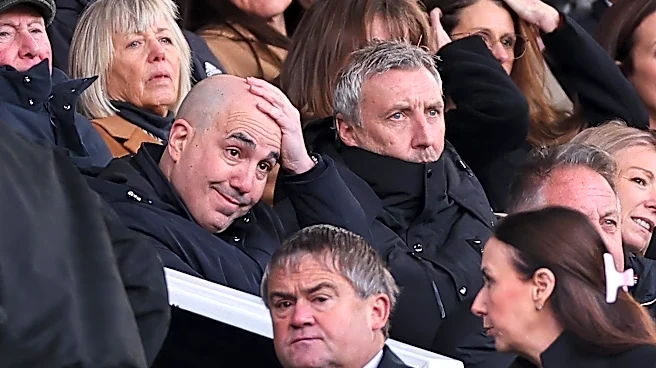
conversations with both the club's hierarchy, including director of football Jason Wilcox and chief executive Omar Berrada, and his players. Carrick stated that these discussions involve 'hard truths' necessary for the team to move forward. Despite a recent 3-0 defeat to Bournemouth, Carrick has retained his position and is tasked with turning the team's performance around, starting with an upcoming match against Chelsea. He noted that while supporters showed appreciation for him after the Bournemouth game, they booed the players, indicating a perceived lack of effort. Carrick emphasized that the players are 'hurting' but are 'hungry' to improve their situation.
Why It's Important?
This situation highlights the intense pressure and scrutiny faced by top-tier football clubs and their management in the U.S. and globally. A prolonged winless streak not only impacts team morale and player performance but also has significant financial implications through reduced ticket sales, merchandise revenue, and potential drops in sponsorship deals. For Manchester United, a club with a substantial global fanbase and commercial presence, a downturn in performance can affect its brand value and marketability. The 'hard truths' approach by Carrick underscores the critical need for accountability and strategic adjustments within a high-stakes professional sports environment. The team's struggle also affects fan engagement and loyalty, which are crucial for the long-term financial health and cultural relevance of any major sports franchise. The outcome of their upcoming matches will be pivotal in determining the immediate future of the coaching staff and the team's standing in the league.
What's Next?
Manchester United is preparing for a crucial Premier League game against Chelsea. This match will be a significant test for Michael Carrick and his team, as they aim to break their eight-game winless streak and begin to climb out of the lower ranks of the league table. The inclusion of Kobbie Mainoo, who has returned to full training, is expected to provide a boost to the squad. The performance in this upcoming game will likely influence the perception of Carrick's leadership and the team's ability to respond to adversity. Continued poor results could lead to further pressure on Carrick's position and potentially trigger more significant changes within the club's management or playing staff. The club's hierarchy will be closely monitoring the team's progress as they seek to stabilize their season and regain competitive form.
Beyond the Headlines
The current struggles of Manchester United extend beyond mere game results, touching upon broader themes of professional sports management, player psychology, and fan culture. The public booing of players by supporters, despite their appreciation for the coach, reveals a complex dynamic within the fan base, where expectations of effort and performance are paramount. This situation can lead to increased psychological pressure on players, potentially affecting their mental well-being and on-field performance. Furthermore, the comments from Gary Neville regarding players' professionalism, though laughed off by Carrick, point to underlying issues that can plague high-profile sports teams, such as lifestyle choices impacting athletic performance. The club's ability to navigate this period will not only determine its immediate success but also set precedents for how it manages player conduct, fan relations, and coaching stability in the future, influencing its long-term legacy and appeal.