





What's Happening?
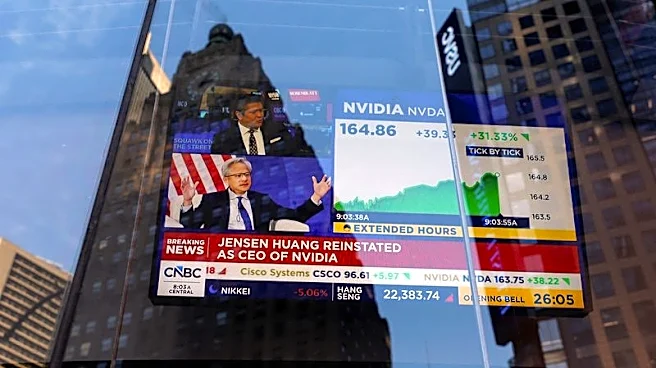
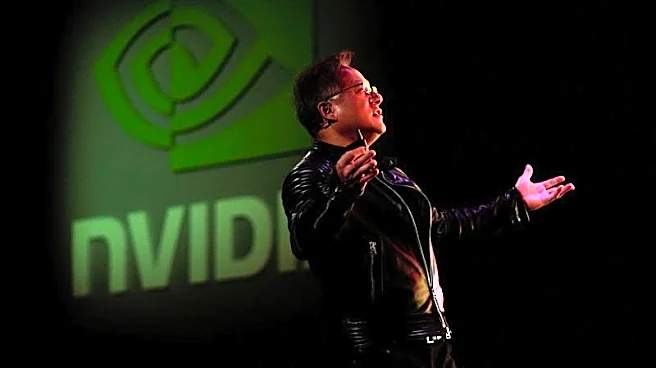
Jensen Huang, co-founder of Nvidia, has been reinstated as the company's Chief Executive Officer on November 23, 2026. This follows his resignation on November 12 due to an alleged Chinese spy scandal, during which CFO Colette Kress served as interim
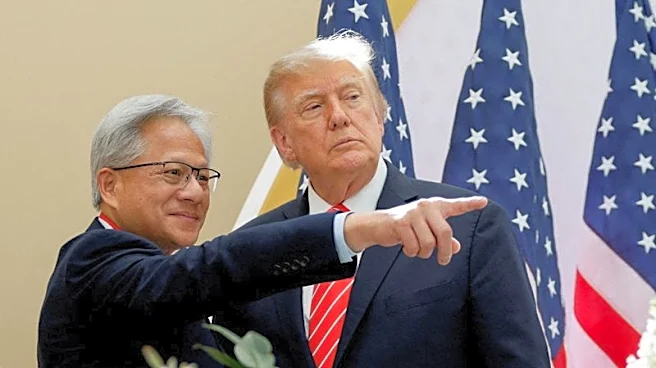
CEO. The Nvidia board unanimously voted for Huang's return, citing satisfaction with his 'candor and ability to lead' after a series of meetings. This reinstatement is notable due to the reported involvement of senior U.S. government officials who assured the company's board that Huang posed no national security risk, addressing concerns about China's interest in Nvidia's advanced chips. President Trump publicly supported the decision, stating his intervention was crucial for Huang's return, marking an unusual instance of government involvement in a publicly traded company's leadership.
Why It's Important?
The reinstatement of Jensen Huang as Nvidia CEO, particularly with reported U.S. government intervention, highlights the critical national security implications of advanced technology companies and their leadership. Nvidia, a key player in chip manufacturing, is central to technological competition, especially concerning China's pursuit of advanced chips. The government's involvement underscores a growing recognition of the strategic importance of such companies to national interests and economic security. This event could set a precedent for future government oversight or influence in the leadership decisions of strategically vital U.S. technology firms, particularly those with significant international operations or intellectual property. It also signals a heightened focus on mitigating potential foreign influence or espionage within critical technology sectors, impacting how U.S. tech companies operate globally and manage their executive leadership.
What's Next?
The immediate consequence of Jensen Huang's reinstatement is the stabilization of Nvidia's leadership after a period of uncertainty. The company will likely continue its strategic initiatives, particularly in the advanced chip market, with renewed confidence from its board and, notably, from U.S. government officials. This event may prompt other U.S. technology companies operating in sensitive sectors to review their internal security protocols and executive vetting processes, anticipating potential government scrutiny. Furthermore, the public statement by President Trump regarding his intervention could lead to discussions about the appropriate extent of government involvement in the private sector, especially concerning companies deemed critical to national security. Future leadership changes in key technology firms might face similar levels of governmental interest and review.
Beyond the Headlines
This incident transcends a typical corporate leadership change, revealing deeper implications regarding the intersection of national security, economic policy, and corporate governance in the U.S. The alleged Chinese spy scandal and subsequent government intervention underscore the increasing geopolitical stakes tied to technological leadership. It suggests a shift towards a more interventionist stance by the U.S. government in safeguarding its technological advantage, particularly against perceived adversaries. This could lead to a re-evaluation of corporate autonomy for companies operating in critical sectors, potentially influencing investment decisions, supply chain management, and international partnerships. The ethical and legal boundaries of such government involvement in private enterprise will likely become a subject of ongoing debate, shaping future policy and corporate behavior in the U.S. technology landscape.