


What's Happening?
Peter Thiel's hedge fund, Thiel Macro LLC, has revealed a significant shift in its investment strategy, concentrating on power generation and distribution companies. According to its latest SEC filing, the fund's portfolio, valued at $418.7 million, includes
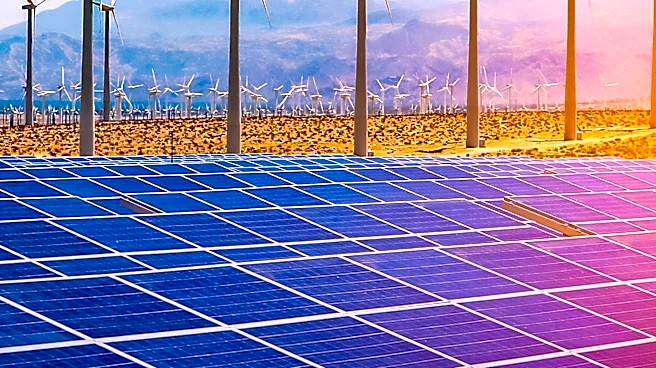
only one technology position, Amazon, while nearly 72% of its assets are allocated to power-related entities. These include Vista Energy, Vistra (a nuclear-capable power generator), and regulated utilities such as American Electric Power, DTE Energy, FirstEnergy, and CMS Energy, along with nuclear developer X-Energy. This move suggests that Thiel believes the next major bottleneck for Artificial Intelligence (AI) will be electricity supply, rather than the availability of AI chips.
Why It's Important?
This investment strategy by Peter Thiel's fund carries significant implications for the U.S. economy and the future of AI development. It highlights a growing concern within the tech and investment communities regarding the escalating power demands of AI data centers. As AI technologies become more sophisticated and widespread, the energy infrastructure required to support them is under increasing strain. This shift in investment signals a potential re-evaluation of where critical resources for AI lie, moving beyond just hardware components like chips to fundamental utilities. For U.S. industries, this could mean increased investment in energy infrastructure, a push for more sustainable and robust power grids, and potentially higher energy costs for data-intensive operations. It also underscores the interconnectedness of technological advancement with basic infrastructure, affecting everything from urban planning to national energy policy.
What's Next?
The investment trend observed in Thiel's fund could prompt other institutional investors to re-evaluate their portfolios, potentially leading to a broader influx of capital into the energy sector, particularly in areas that can support high-demand AI operations. This could accelerate the development of new power generation capacities, including nuclear and renewable energy sources, to meet the growing needs of data centers. Utilities and energy companies may see increased pressure to innovate and expand their infrastructure. Furthermore, policymakers might begin to prioritize energy grid modernization and expansion as a critical component of national AI strategy. The long-term consequence could be a significant transformation of the U.S. energy landscape, driven by the insatiable power requirements of advanced AI.
Beyond the Headlines
The focus on power as AI's next bottleneck reveals a deeper, often overlooked, aspect of technological progress: its reliance on foundational resources. This isn't merely an economic or investment story; it touches upon environmental sustainability, national security, and urban development. The massive energy consumption of AI raises questions about the carbon footprint of digital innovation and the need for green energy solutions. Ethically, it prompts discussions about equitable access to resources and the potential for energy scarcity to exacerbate existing inequalities. Culturally, it shifts the narrative from the 'digital' to the 'physical' infrastructure underpinning our technological future, reminding us that even the most advanced AI depends on tangible resources like electricity. This strategic pivot by a prominent investor like Thiel could catalyze a broader societal conversation about the true cost and requirements of the AI revolution.