



What's Happening?
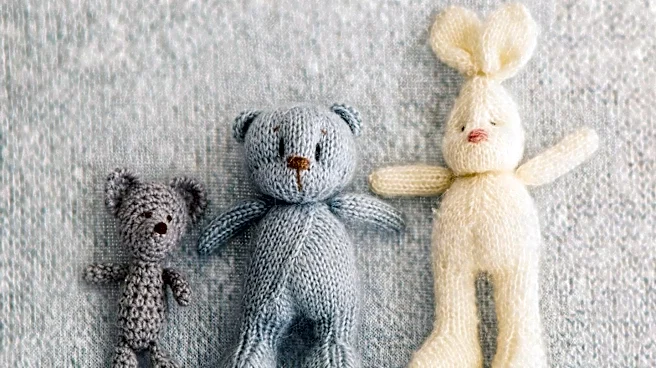
In the village of Harford, Cheshire, a mysterious figure known as 'Granny H' has been delighting children with her handmade knitted toys. For two years, children have embarked on daily treasure hunts to find these toys, which are hidden in various locations
around the village. The toys, which include knitted bears, lambs, and dogs, are left in zip-lock bags with a tag signed by Granny H. Recently, the identity of Granny H was revealed to be June Rose Hood, a 90-year-old woman who finds knitting therapeutic. Her grandson assists in hiding the toys. The community recently celebrated her 90th birthday, acknowledging her contributions to the village's joy.
Why It's Important?
Granny H's story highlights the impact of small acts of kindness on community well-being. Her initiative not only brings joy to children but also fosters a sense of community and connection among residents. The act of knitting and distributing toys has provided Hood with a sense of purpose and helped her cope with anxiety. This story underscores the importance of community engagement and the positive effects of creative hobbies on mental health. It also illustrates how individual actions can create a ripple effect, enhancing the social fabric of a community.
What's Next?
As Granny H continues her knitting, the village of Harford can expect the tradition of toy hunting to persist, further strengthening community bonds. The recognition and celebration of her efforts may inspire others to engage in similar acts of kindness. The community's response to Granny H's initiative could lead to more organized community events or projects that promote social interaction and support. Additionally, her story may encourage other individuals, particularly the elderly, to find therapeutic hobbies that contribute to their well-being and community involvement.
Beyond the Headlines
Granny H's story raises broader questions about the role of the elderly in community life and the potential for creative activities to enhance mental health. It challenges stereotypes about aging and highlights the value of intergenerational interactions. The initiative also prompts discussions about how communities can support and recognize the contributions of their older members, potentially leading to more inclusive and supportive environments for all ages.