





What's Happening?
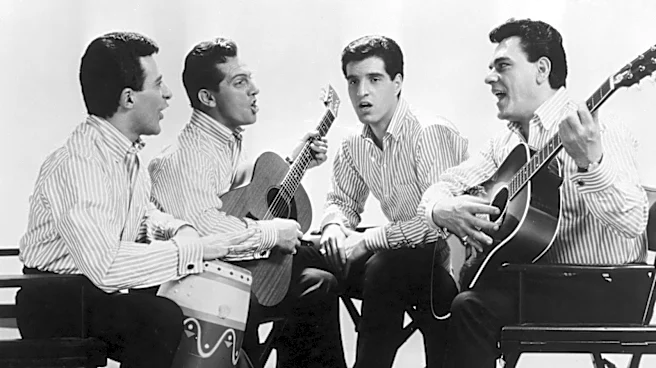
The doo-wop group The Tokens, consisting of Philip and Mitch Margo, Hank Medress, and Jay Siegel, achieved massive success with their 1961 single 'The Lion Sleeps Tonight,' which sold approximately 3.5 million copies and topped the charts for three weeks.
However, the band members, particularly the Margo brothers, were initially embarrassed by the song and attempted to persuade producers Hugo Peretti and Luigi Creatore not to release it. The song was a reimagining of Solomon Linda's 1939 hit 'Mbube.' Despite their earlier success with 'Tonight I Fell in Love,' which peaked at 15th, The Tokens felt 'The Lion Sleeps Tonight' was out of place with the emerging rock 'n' roll scene of the early 1960s. The producers, however, saw its potential as a hit, interpreting the band's reluctance as a sign of its unique appeal.
Why It's Important?
This event highlights the often-unpredictable nature of commercial success in the music industry and the potential disconnect between artists' perceptions of their work and public reception. The song's enduring popularity, despite the band's initial reservations, demonstrates how certain tracks can transcend contemporary trends and become cultural touchstones. For the music industry, it underscores the role of producers in identifying and championing songs that artists themselves might undervalue. The significant royalties and sync cash generated by 'The Lion Sleeps Tonight' also illustrate the long-term financial impact a single hit can have, even for artists who don't maintain a consistent presence in the spotlight. This case also touches on the concept of 'one-hit wonders,' where a single song defines an artist's legacy, sometimes leading them to pursue careers behind the scenes, as The Tokens did by becoming producers.
What's Next?
While The Tokens largely transitioned into production careers after their major hit, 'The Lion Sleeps Tonight' continues to be licensed for various media, ensuring ongoing royalties for its contributors. The song's presence in shopping malls and grocery stores, as noted in other contexts, suggests its continued cultural relevance and ability to evoke nostalgia. The story of its reluctant release serves as an anecdote within music history, often revisited in discussions about one-hit wonders and the dynamics between artists and their creative output. Future adaptations or uses of the song in film, television, or advertising are always possible, further extending its legacy and financial impact.
Beyond the Headlines
The story of 'The Lion Sleeps Tonight' delves into the psychological aspects of artistic creation and commercialization. The band's embarrassment over a song that became their biggest hit speaks to the pressure artists face to align with prevailing trends versus creating something that resonates broadly, even if it's perceived as 'cheesy.' It also touches on the concept of artistic control versus commercial viability, where producers sometimes have a clearer vision for a song's market potential than the artists themselves. The song's journey from a 1939 African hit to a global pop phenomenon also subtly highlights the complex history of musical appropriation and adaptation, though the source does not delve into this aspect. Ultimately, it's a testament to the power of a catchy melody and universal appeal, proving that sometimes, the most unexpected songs achieve the greatest longevity.