

What's Happening?
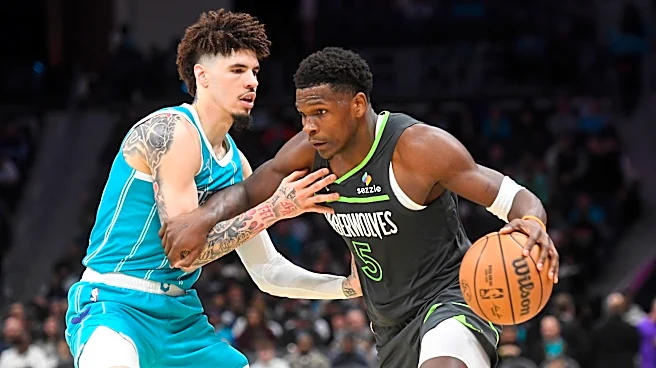
Chris Finch, the head coach of the Minnesota Timberwolves, has stated that the team plans to begin the upcoming season with only 14 players on its roster. This decision, articulated during a radio appearance on WCCO, is primarily driven by a desire for
salary cap flexibility. Finch emphasized that the team believes it currently possesses sufficient talent and does not see an immediate need to sign an additional player. This strategy allows the Timberwolves to maintain financial maneuverability, potentially enabling them to acquire a veteran player who might become available through a buyout later in the season. The team recently signed KJ Martin, Drew Timme, and Norchad Omier to training camp contracts, but their chances of securing the final roster spot are impacted by this organizational decision.
Why It's Important?
This strategic decision by the Minnesota Timberwolves has significant implications for both the team's immediate roster construction and its long-term financial planning. By keeping one roster spot open, the Timberwolves gain valuable salary cap flexibility, which can be crucial in the dynamic landscape of the NBA. This flexibility allows them to be opportunistic in the trade market or to sign a high-caliber player who might be bought out by another team during the season, potentially strengthening their roster without incurring immediate luxury tax penalties. For players like KJ Martin and Drew Timme, who are currently vying for a spot, this means an even more competitive environment, as the team is not guaranteed to fill the 15th slot. This approach reflects a growing trend in the NBA where teams prioritize financial agility to adapt to unforeseen opportunities or challenges throughout a demanding season.
What's Next?
The Minnesota Timberwolves will proceed with their training camp, where players like KJ Martin, Drew Timme, and Norchad Omier will compete for a potential roster spot, despite the team's stated intention to start with 14 players. Their performance during camp will be critical in determining if the Timberwolves alter their initial plan. The team will closely monitor the league for potential buyout candidates or trade opportunities as the season progresses, leveraging their cap flexibility. This strategy suggests that any additions to the roster, particularly for the 15th spot, will likely be made with a specific need or high-value player in mind, rather than simply filling the roster immediately. The focus will be on maintaining a competitive edge while preserving financial options for future strategic moves.
Beyond the Headlines
The Timberwolves' decision to start the season with 14 players highlights a sophisticated approach to roster management in the modern NBA, moving beyond simply filling all available spots. This strategy underscores the increasing importance of financial engineering and long-term planning in professional sports. It reflects a calculated risk, balancing immediate roster depth against the potential for acquiring a more impactful player later in the season. This trend could influence other teams to adopt similar flexible roster strategies, prioritizing financial agility over immediate full roster capacity. It also subtly shifts the pressure onto players on non-guaranteed contracts, as teams become more selective and patient in their roster finalization, emphasizing performance and strategic fit over sheer numbers.