






What's Happening?
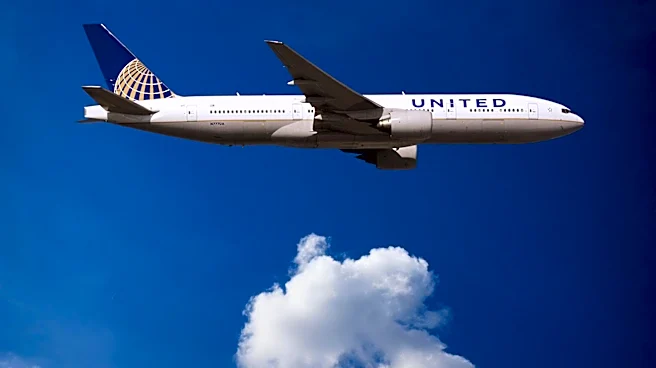
United Airlines' stock has dropped by 3.4% as concerns over rising fuel costs continue to impact the airline sector. The company had previously warned that higher oil prices could add nearly $6 billion to its 2026 fuel bill, significantly affecting its earnings
outlook. United's third-quarter adjusted EPS is projected to be between $2.50 and $3.50, with full-year expectations ranging from $9 to $11. The airline's ability to meet the higher end of its guidance is contingent on fuel prices stabilizing at early-July levels. The recent profit-guidance cut by a rival airline has further pressured United's stock.
Why It's Important?
The decline in United Airlines' stock reflects broader challenges facing the airline industry, where fuel costs are a major determinant of profitability. As fuel prices remain volatile, airlines are under pressure to manage costs while maintaining competitive pricing. United's situation highlights the delicate balance airlines must strike between operational efficiency and financial performance. Investors are closely monitoring these developments, as sustained high fuel costs could lead to reduced profit margins and impact shareholder returns.
What's Next?
United Airlines and other carriers may need to explore strategies to mitigate the impact of rising fuel costs, such as hedging fuel prices or increasing operational efficiencies. The airline's ability to pass on these costs to consumers through higher ticket prices will be crucial in maintaining profitability. Additionally, the industry will be closely monitoring geopolitical developments that could further influence oil prices. Stakeholders, including investors and unions, will likely pressure airline management to address these challenges effectively to ensure financial stability.