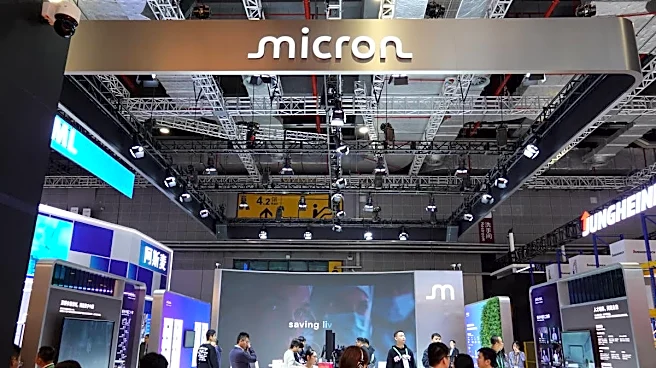









What's Happening?
Micron Technology reported record earnings for fiscal Q3 2026, with revenue reaching $41.46 billion, a 346% increase year-over-year. Despite these strong results, Micron's stock has fallen over 20% from its post-earnings high. The decline is attributed
to concerns about the sustainability of current earnings levels, as the memory industry faces potential oversupply and pricing pressures. Major competitors like Samsung and SK Hynix are significantly increasing their capital expenditures, which could impact Micron's market position. Additionally, reports of Apple negotiating with Chinese suppliers for cheaper memory options have raised questions about future demand for Micron's products.
Why It's Important?
The stock decline highlights the volatility and cyclical nature of the semiconductor industry, where short-term gains can be overshadowed by long-term supply and demand dynamics. Micron's situation reflects broader industry trends, where increased competition and potential oversupply could affect profitability. The company's reliance on strategic customer agreements through 2027 provides some stability, but shifts in supply chains, such as Apple's potential move to Chinese suppliers, could alter market dynamics. Investors and industry stakeholders must consider these factors when evaluating the future prospects of memory chip manufacturers.
What's Next?
As the semiconductor industry continues to evolve, companies like Micron will need to adapt to changing market conditions. The potential entry of new competitors and shifts in supply chains may prompt strategic adjustments in production and pricing strategies. Policymakers and industry leaders may also focus on fostering innovation and investment in domestic manufacturing to maintain competitiveness. The ongoing demand for AI and other advanced technologies will likely drive further developments in the memory sector, influencing future investment and growth opportunities.