
What's Happening?
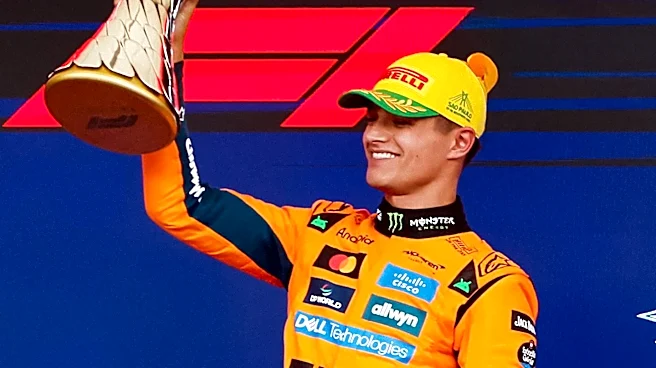
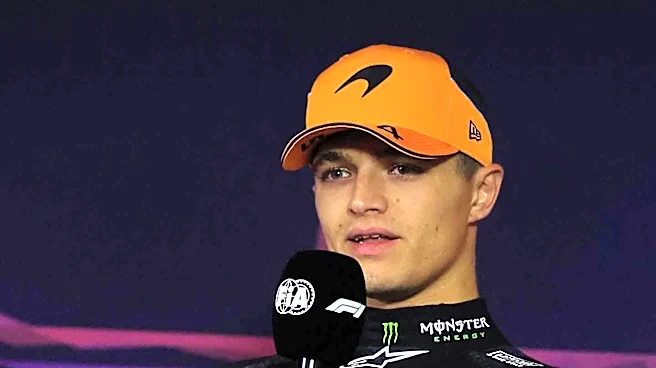
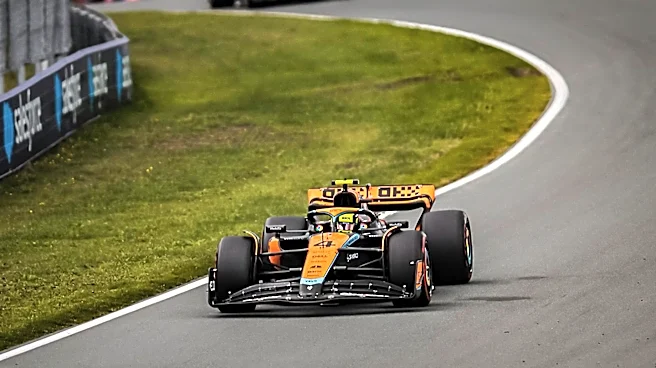
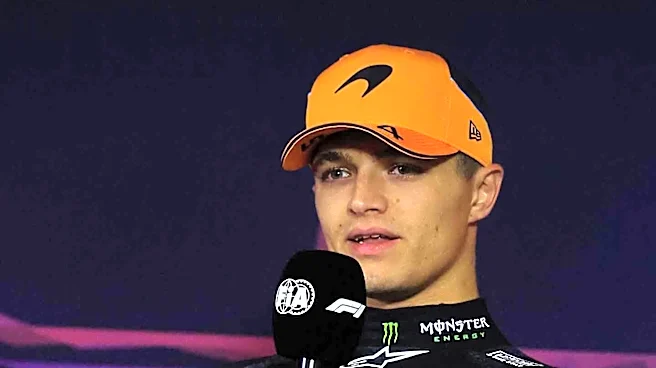
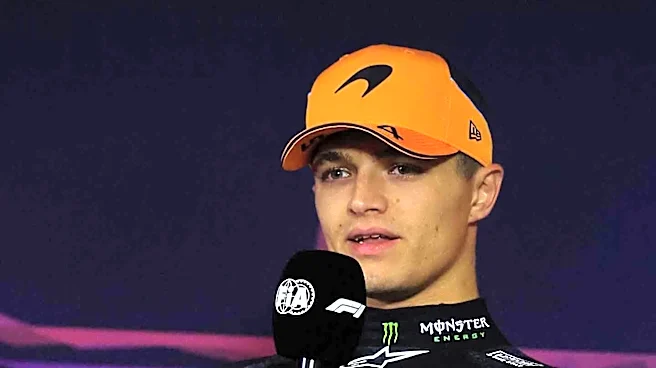
McLaren team principal Andrea Stella has lauded Lando Norris' exceptional adaptability in mixed weather conditions, identifying it as a key trait that places him among Formula 1's elite drivers. This commendation follows Norris' commanding victory at the Sao
Paulo Grand Prix, where he demonstrated superior performance in fluctuating track conditions. Norris initially lost the lead on a damp track but regained it after Kimi Antonelli spun. Despite a challenge from Max Verstappen, Norris extended his lead when rain returned, securing his second consecutive win at the circuit. Stella emphasized Norris' sensitivity in understanding available grip and his comprehensive technical ability to deploy tools and adapt to car balance, even in imperfect conditions. This skill, according to Stella, is crucial for a top-tier driver, and Norris has proven to be a master of it.
Why It's Important?
Norris' demonstrated adaptability is crucial for McLaren's competitive standing in Formula 1. In a sport where conditions can change rapidly, a driver's ability to perform consistently across varying circumstances can be the difference between victory and defeat. This trait not only secures individual race wins but also contributes significantly to the team's overall championship aspirations. For McLaren, having a driver like Norris who can excel in challenging conditions reduces reliance on a perfectly optimized car for every scenario, offering a strategic advantage. This also impacts the team's development focus, as they can continue to refine the car while knowing their driver can maximize its potential even when it's not ideal. Norris' performance also elevates his profile within the sport, potentially attracting further investment and talent to McLaren.
What's Next?
Following Norris' impressive performance, McLaren will likely continue to leverage his adaptability while simultaneously working to improve the overall driveability of their car. Andrea Stella acknowledged that despite Norris' skills, the MCL40 and its successor still have room for improvement, particularly in making the car easier to drive. The team's focus will be on providing both Norris and Oscar Piastri with a more competitive and less challenging car, aiming to reduce the need for drivers to constantly compensate for car characteristics. This dual approach of maximizing driver talent and enhancing vehicle performance will be critical for McLaren's future campaigns, as they aim for more consistent front-running results and championship contention in upcoming seasons.
Beyond the Headlines
Norris' adaptability highlights a broader trend in modern Formula 1, where the complexity of hybrid powertrains, tire management, and aerodynamic sensitivities demand drivers with an exceptional range of skills beyond raw speed. The ability to quickly assess and react to changing track conditions, manage tire degradation, and extract performance from a car that may not always be perfectly balanced is becoming increasingly vital. This emphasis on adaptability also underscores the evolving role of driver feedback in car development. A driver who can articulate precisely how the car behaves in different conditions provides invaluable data for engineers, leading to more targeted and effective upgrades. This symbiotic relationship between driver skill and engineering development is key to sustained success in the highly competitive world of Formula 1.