

What's Happening?
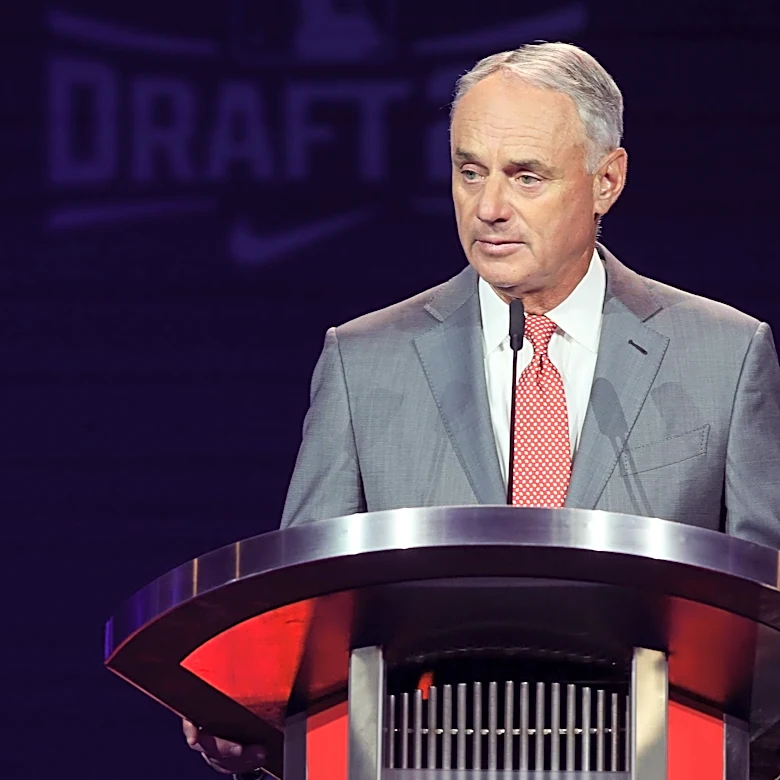
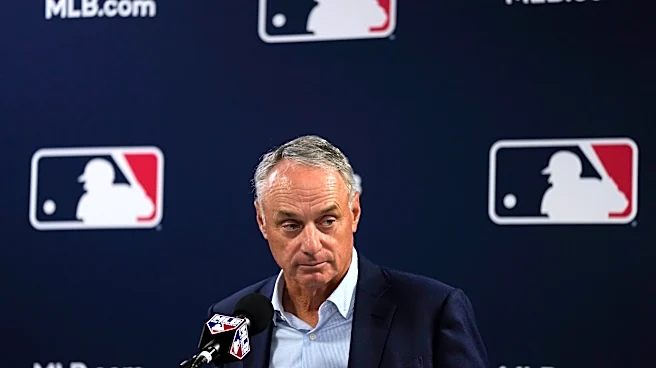
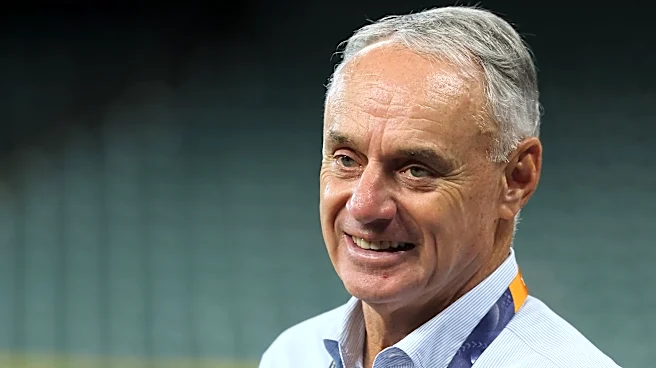
Major League Baseball Commissioner Rob Manfred has declared that team owners will not compromise on their demand for a salary cap and floor in the new collective bargaining agreement. This firm stance puts MLB on a path toward a potential lockout starting
December 2, which could jeopardize the 2027 season. Manfred stated at an owners' meeting that he cannot envision owners ratifying a deal without these provisions. The MLB's proposal includes a hard cap of $258.2 million for 2028 and a floor of $180.2 million, along with individual contract caps at 15% of payroll. The Players Association, however, remains steadfastly opposed to a salary cap, labeling it a "non-starter." This disagreement echoes the 1994 labor dispute that led to a 7.5-month strike and the cancellation of the World Series.
Why It's Important?
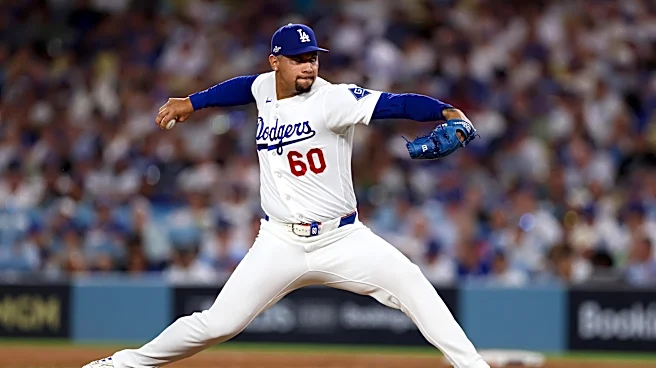
The insistence on a salary cap by MLB owners and the strong opposition from the Players Association represent a critical juncture for the sport, with significant financial and competitive implications. Owners argue that a salary cap and floor are essential for competitive balance, citing that only one team outside the top 20 payrolls has won a World Series since 1998. They contend that high-spending teams like the Los Angeles Dodgers, New York Mets, New York Yankees, and Philadelphia Phillies have disproportionately committed billions to free agents, while smaller market teams struggle to compete. A salary cap would force these high-spending teams to significantly cut payrolls, with the Dodgers potentially needing to reduce by $174 million and the Mets by $108 million for 2028. This could redistribute talent and financial resources across the league, potentially creating a more level playing field but also impacting player earnings and contract structures.
What's Next?
With the current collective bargaining agreement expiring on December 1, the league is poised for a lockout if no resolution is reached. A lockout would immediately halt all trades and free-agent signings, creating uncertainty for players and teams. Commissioner Manfred indicated that a decision on a lockout would be made at the "last possible moment," but emphasized the owners' unwavering position on the salary cap. The Players Association has proposed a "competitive integrity tax" and increased minimum salaries and arbitration rights as alternatives, but MLB views these as insufficient. The coming weeks will be crucial for negotiations, as both sides attempt to avert a work stoppage. The outcome will determine the economic framework of MLB for the foreseeable future, impacting player movement, team spending, and ultimately, the competitive landscape of the sport.
Beyond the Headlines
The salary cap debate in MLB is not merely about financial figures; it delves into the philosophical underpinnings of professional sports economics. Owners frame it as a matter of competitive fairness and long-term sustainability, aiming to prevent a few wealthy teams from dominating. Players, conversely, view it as an attempt to suppress wages and limit their earning potential, arguing that a cap restricts the free market for their labor. This conflict highlights the tension between the desire for competitive parity and the principles of free agency. The potential for a lockout also carries broader implications for fan engagement and the sport's public image, as past work stoppages have alienated fans and caused significant financial losses. The resolution of this dispute will set a precedent for future labor negotiations in professional sports and could redefine the relationship between players and ownership in MLB.