








What's Happening?
Leaked documents, published by the Organized Crime and Corruption Reporting Project (OCCRP) on October 22, allege that Indonesia's Harita Group, a major nickel mining company, has systematically paid for local permits and to silence opposition on Obi
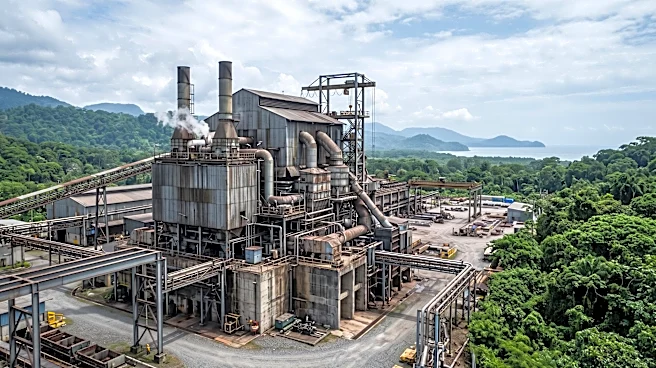
island. These documents suggest a pattern of payments between 2013 and 2023, totaling at least $389,000, directed to village officials, religious leaders, a district head, and military projects. This comes after a 2024 court case where a Harita director was sentenced for bribing a governor to ease mining permits, though Harita itself was not charged. The OCCRP report indicates that Harita allegedly built its first smelter without a building permit due to close ties with local officials and even drafted a government decision on hazardous waste storage, removing a critical field check requirement. Residents of Kawasi, a village near Harita's plant, claim jobs and contracts were routed through the village head, who also reportedly identified and reported protestors to keep them off the company's payroll. Despite marketing Obi's nickel as a 'clean-energy metal,' Harita's operations largely rely on coal-fired power, with significant CO2 emissions.
Why It's Important?
This investigation is critically important for the global electric vehicle (EV) battery supply chain, as Indonesia produces approximately two-thirds of the world's mined nickel, a key component in EV batteries. The allegations of corruption and environmental misconduct by Harita Group, a significant player in this supply chain, undermine the 'clean' image of EV technology. The reliance on coal-fired power for nickel processing, with estimated emissions of 10.87 million tonnes of CO2 equivalent in 2024, directly contradicts global efforts to combat climate change and transition to sustainable energy. Furthermore, the alleged payments for permits and silence raise serious ethical concerns about corporate governance, human rights, and environmental justice in resource-rich developing nations. If these practices are widespread, they could lead to a lack of accountability for environmental damage and social displacement, impacting local communities and potentially tarnishing the reputation of companies sourcing nickel from Indonesia. The involvement of Chinese capital in financing much of the processing also highlights the complex international dimensions of critical mineral supply chains.
What's Next?
The OCCRP's leaked documents are expected to prompt further scrutiny of Harita Group's operations and the broader Indonesian mining sector. The Initiative for Responsible Mining Assurance, which is currently auditing Harita, is urged to consider these leaked documents in its assessments. Two key actions are proposed: first, Indonesia's Corruption Eradication Commission should investigate Harita as a company, not just individuals, leveraging the new national criminal code that allows for corporate liability. Second, Lygend, Harita's Chinese partner, should commission an independent review of social conditions around its Obi operations, publish the findings, and set a clear timeline for replacing coal power. The outcome of these investigations and any subsequent reforms could significantly impact the regulatory landscape for mining in Indonesia and influence how international companies engage with resource extraction in the country. Consumers and manufacturers in the EV industry may also demand greater transparency and ethical sourcing from their supply chains, potentially leading to shifts in procurement practices.
Beyond the Headlines
The allegations against Harita Group expose the intricate and often opaque connections between global demand for critical minerals, local governance, and environmental sustainability. The concept of 'green batteries built on dirty dealings' highlights a fundamental paradox in the clean energy transition: the environmental and social costs incurred in the production of 'green' technologies. This situation could trigger a broader re-evaluation of supply chain ethics and due diligence practices across industries reliant on critical minerals. The alleged manipulation of permits and silencing of local opposition point to systemic vulnerabilities in regulatory enforcement and the potential for powerful corporations to exploit these weaknesses. The long-term implications include increased pressure on international bodies and governments to establish more robust frameworks for responsible sourcing and corporate accountability, particularly in countries with significant mineral wealth. This case also underscores the importance of investigative journalism and civil society organizations in uncovering malpractices that might otherwise remain hidden, driving public discourse and demanding change.