






What's Happening?
Q-CTRL, a provider of quantum infrastructure software, has successfully closed an oversubscribed Series C funding round, raising US$290 million (A$415 million). The round was led by Salesforce Ventures and expanded twice due to high institutional demand,
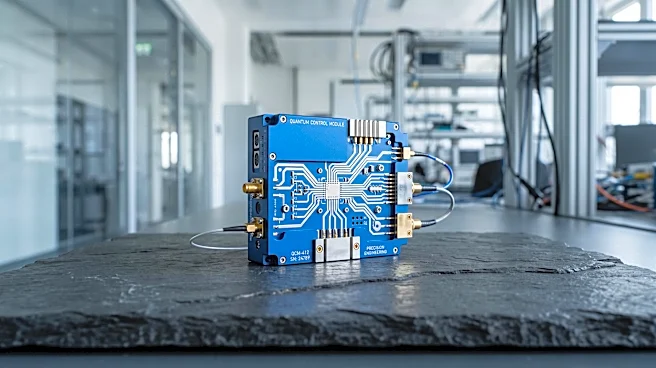
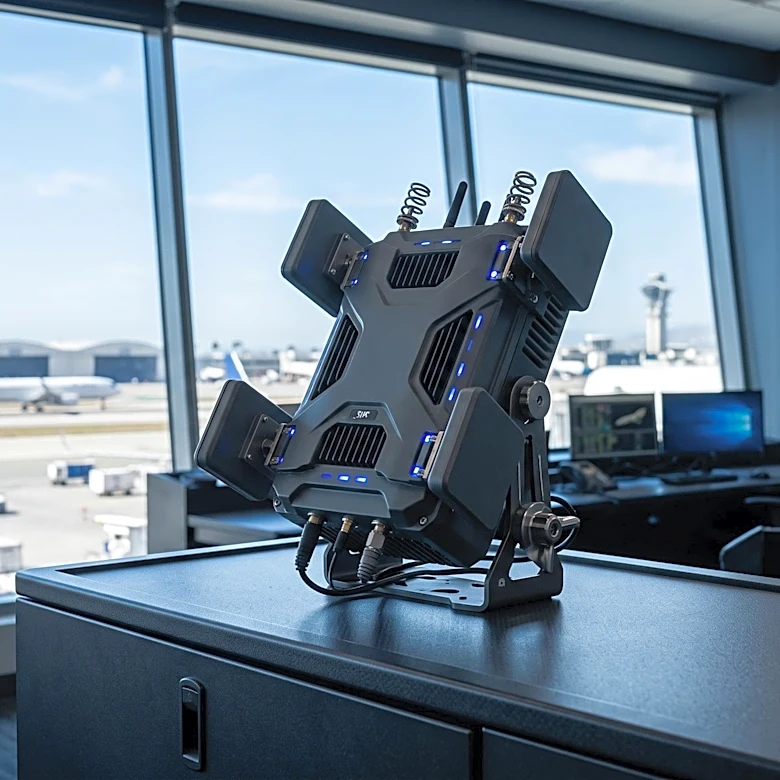
valuing the Sydney- and U.S.-based company at over $1 billion. This marks the largest private capital raise for a software-focused quantum technology firm to date. Q-CTRL plans to utilize the new capital to expand its AI-driven control software stack and scale global commercial deployments across various sectors, including finance, energy, defense, and aerospace. The company's software, which includes Fire Opal and Boulder Opal for noise suppression and calibration in gate-model quantum computers, and Ironstone Opal for GPS-denied quantum magnetic navigation, has achieved significant technical and regulatory milestones, such as RTCA DO-160 airworthiness qualification for Ironstone Opal.
Why It's Important?
This substantial funding for Q-CTRL highlights the growing recognition of software's critical role in unlocking the full potential of quantum hardware. As quantum computers become more powerful, the need for sophisticated control software to manage noise, automate calibration, and ensure reliable operation becomes paramount. Q-CTRL's success in securing this investment signifies a maturing quantum ecosystem where specialized software solutions are attracting significant capital. For U.S. industries, this means improved access to tools that can enhance the performance and applicability of quantum computing in sectors like finance (for complex modeling), energy (for optimization), defense (for secure navigation), and aerospace (for advanced simulations). The company's valuation exceeding $1 billion also indicates strong investor confidence in the commercial viability and long-term impact of quantum software, potentially accelerating the adoption of quantum technologies across the U.S. economy.
What's Next?
Q-CTRL intends to allocate the newly acquired capital towards expanding its AI-driven control software stack, which will likely involve developing more advanced algorithms and features to further enhance quantum computer performance and reliability. The company also plans to scale its global commercial deployments, indicating an aggressive push to integrate its software into more quantum computing platforms and across a wider range of industries. This expansion will include accelerating its commercial presence in Japan's industrial and high-performance computing sectors, as well as continuing to serve its existing markets. The deployment of its Fire Opal Dynamics Simulator within the IBM Quantum Functions Catalog and the RTCA DO-160 airworthiness qualification for Ironstone Opal suggest a focus on practical integration and regulatory compliance, paving the way for broader adoption of its quantum software solutions.
Beyond the Headlines
Q-CTRL's record-breaking funding round underscores a crucial shift in the quantum computing landscape: the increasing importance of the software layer. While much attention has historically been on quantum hardware, this investment signals that robust, intelligent software is essential for making quantum computers practical and accessible. This development has broader implications for the U.S. tech industry, as it emphasizes the need for a skilled workforce capable of developing and deploying such specialized software. Furthermore, the application of Q-CTRL's technology in areas like GPS-denied navigation (Ironstone Opal) highlights the potential for quantum software to address critical national security and infrastructure challenges. The ethical considerations around the power of quantum computing, particularly in defense applications, will also become more prominent as these technologies mature and become more widely adopted, necessitating careful policy and regulatory frameworks.