






What's Happening?
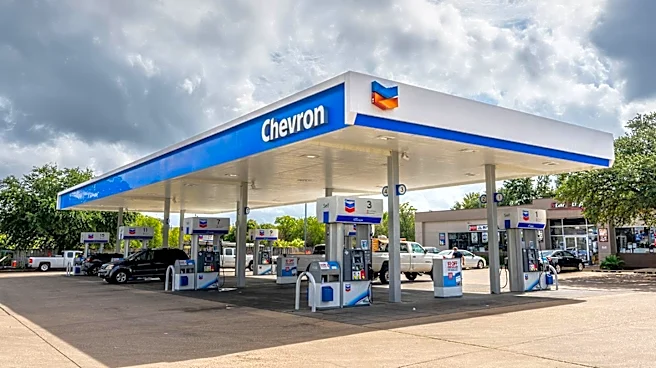
Chevron has ceased funding for the feasibility study of the Berbice deepwater port project in Guyana. This decision follows Chevron's acquisition of Hess Corporation in 2025, which had previously financed the pre-front-end engineering and design (pre-FEED)
phase of the port. The proposed $1 billion to $2 billion port is intended to support Guyana's burgeoning offshore oil industry, particularly operations in the Stabroek Block, where ExxonMobil holds a 45% stake, Chevron holds 30%, and China National Offshore Oil Corporation (CNOOC) holds 25%. The port was also envisioned as a transshipment hub for northern Brazil and would include an industrial complex with data centers, a fertilizer plant, and a refinery. The pre-FEED phase was completed by Bechtel in 2023, but the project has stalled due to the lack of funding for the full feasibility study. Guyana's current main port, Georgetown, has a shallow channel limiting access for larger vessels, creating logistical challenges for the expanding oil and gas sector.
Why It's Important?
Chevron's withdrawal of funding creates a significant hurdle for Guyana's ambition to develop critical infrastructure for its rapidly expanding oil and gas sector. The Berbice deepwater port is crucial for accommodating larger vessels required by offshore operations, which are projected to double by 2030. Without this port, Guyana will continue to rely on shallower ports and potentially more expensive transshipment hubs in neighboring countries, increasing operational costs for oil companies and potentially slowing investment in the Stabroek Block. The port's development is also vital for Guyana's broader economic strategy, aiming to establish the country as a regional energy and trade hub, especially for northern Brazil. The funding gap now necessitates Guyana to seek alternative international partners, highlighting the geopolitical significance of the project and the country's efforts to diversify its economic partnerships.
What's Next?
Guyana is actively seeking alternative funding sources to complete the feasibility study for the Berbice deepwater port. The Export-Import Bank of the United States (EXIM) has pledged support for the phase three engineering design study, but this only covers a portion of the total costs. Guyana's President, Mohammed Irfaan Ali, has indicated that Qatar has expressed interest in participating in the port's development, though no formal agreements have been announced. The government is exploring public-private partnerships and direct investment from other energy companies operating in the Stabroek Block. The completion of the feasibility study is a critical next step, as it is required to attract further investment and progress to the detailed engineering and construction phases. Delays in securing funding and advancing the project could lead to logistical bottlenecks for Guyana's energy sector, impacting future production and investment.
Beyond the Headlines
The withdrawal of Chevron's funding for the Berbice deepwater port project underscores the complex interplay of corporate mergers, national development goals, and international geopolitical interests in the energy sector. While Chevron's decision may be a strategic realignment post-acquisition, it places Guyana in a position to re-evaluate its infrastructure development partners. This situation could lead to increased involvement from other global players, potentially shifting regional influence and economic alliances. The project's broader implications extend to regional trade dynamics, as a fully functional deepwater port in Guyana could significantly alter shipping routes and economic dependencies for countries like Brazil. Furthermore, the incident highlights the ongoing challenge for developing nations to secure consistent funding for large-scale infrastructure projects, especially when relying on private sector commitments that can change due to corporate restructuring or shifting priorities.