


What's Happening?
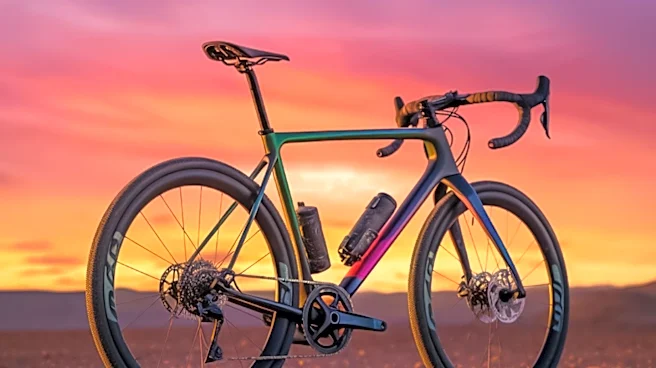
Van Rysel has launched its new EDR-G gravel bike, designed with a strong emphasis on comfort, endurance, and accessibility for a broad range of riders. The 'EDR' stands for endurance and 'G' for gravel, signaling its purpose. Product manager Rachel Gassier
stated that the design prioritizes a softer, more approachable aesthetic and ride feel compared to aggressive race bikes. Key features include soft curves in the seat stays for comfort and style, 15 mounting points for bikepacking, a dynamo-compatible fork, and a custom tool roll integrated into the downtube storage. The bike's geometry, with a slack 69-degree head tube angle and an upright riding position, aims to provide stability and confidence, particularly on challenging terrain. It is available in three build configurations, including an option with a RockShox Rudy XPLR 40mm suspension fork.
Why It's Important?
The introduction of the Van Rysel EDR-G signifies a growing trend in the cycling industry towards making adventure cycling more accessible and comfortable for a wider audience. By focusing on endurance and user-friendly features rather than pure race performance, Van Rysel is catering to riders who seek to explore longer distances and varied terrains without the physical toll often associated with more aggressive bikes. This approach could expand the gravel cycling market, attracting new participants who might have been intimidated by the sport's more competitive aspects. The integrated tool storage and numerous mounting points also highlight a shift towards self-sufficiency and multi-day adventures, potentially influencing accessory markets and bikepacking culture. The emphasis on comfort and stability could also reduce barriers to entry for less experienced riders, fostering greater participation in outdoor activities.
What's Next?
The Van Rysel EDR-G is expected to appeal to a segment of the U.S. cycling market looking for versatile and comfortable gravel bikes. Its competitive pricing and feature set could position it as a strong contender against established brands, potentially driving innovation in the mid-range gravel bike category. Future iterations might see further enhancements in tire clearance, as hinted by Rachel Gassier, to accommodate even more challenging terrains. The success of this model could encourage other manufacturers to prioritize comfort and accessibility in their designs, leading to a broader selection of endurance-focused gravel bikes. Additionally, the integrated tool solutions and bikepacking readiness could become standard expectations for adventure-oriented bikes, influencing future product development across the industry.
Beyond the Headlines
The design philosophy behind the Van Rysel EDR-G reflects a deeper cultural shift in how people approach outdoor activities and adventure. Moving away from the 'faster is better' mentality, the bike champions 'smoother is more confident and enjoyable,' suggesting a desire for more mindful and less competitive engagement with sports. This could have implications beyond cycling, influencing the design of other outdoor gear and experiences that prioritize well-being and accessibility over peak performance. The bike's features, such as integrated storage and dynamo compatibility, also speak to a growing interest in self-reliance and sustainable travel, aligning with broader societal values of independence and environmental consciousness. This product could contribute to a more inclusive and diverse outdoor community, where the joy of exploration takes precedence over speed records.