









What's Happening?
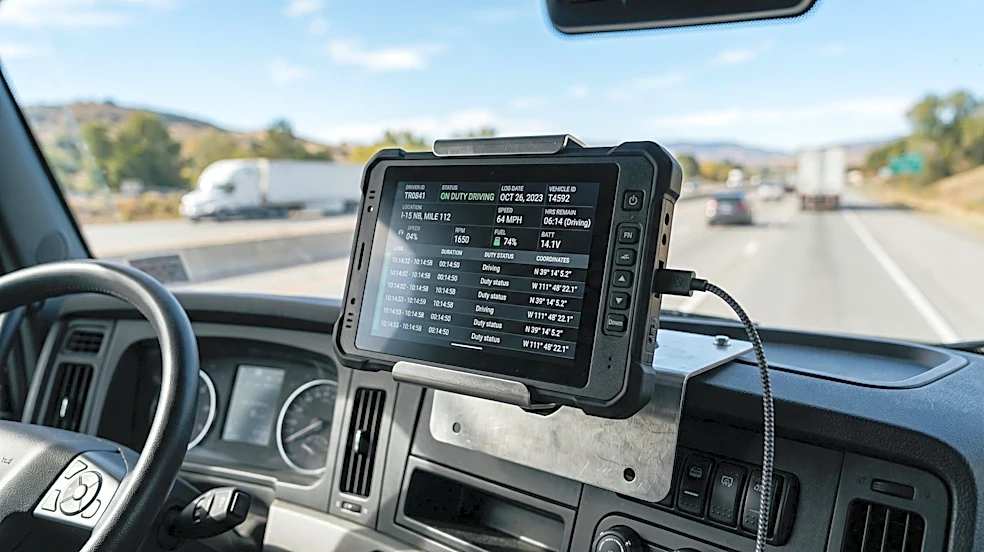
Republican U.S. Representative Greg Steube of Florida, alongside Representative Dave Taylor of Ohio, has introduced the GHOSTRUCK Act in the House. This proposed legislation aims to address the growing issue of electronic logging device (ELD) manipulation
within the trucking industry. The GHOSTRUCK Act specifically mandates that any edits made to ELD records by a carrier, dispatcher, or other authorized agent must originate from an individual physically located in North America. This measure is a direct response to the increasing technical sophistication of ELD tampering, including schemes involving 'ghost drivers' and the use of non-compliant ELD devices, often facilitated by offshore entities. These fraudulent practices allow drivers to circumvent hours-of-service (HOS) limits, posing significant safety risks and creating an unfair competitive advantage for non-compliant carriers.
Why It's Important?
The GHOSTRUCK Act is important because it targets a critical loophole in the enforcement of trucking safety regulations. ELD manipulation, which includes falsifying driver logs and creating fictitious driver accounts, directly undermines HOS rules designed to prevent driver fatigue and enhance road safety. By requiring ELD edits to originate from North America, the bill seeks to curb the influence of offshore dispatchers and dubious technology vendors who facilitate these fraudulent activities. This could lead to a more level playing field for compliant motor carriers, who often lose business to competitors engaging in illegal practices. Ultimately, the legislation aims to improve highway safety by ensuring more accurate and reliable tracking of driver hours, thereby reducing the risk of fatigue-related accidents and protecting both truck drivers and the general public.
What's Next?
The GHOSTRUCK Act will proceed through the legislative process in the House of Representatives, where it will be reviewed by relevant committees. If it gains traction, it could be debated and potentially voted on by the full House. Should it pass the House, it would then move to the Senate for consideration. The bill's passage would necessitate changes in how trucking companies manage their ELD data, particularly for those utilizing offshore support for log edits. Enforcement agencies, such as the Federal Motor Carrier Carrier Safety Administration (FMCSA), would be tasked with implementing and overseeing compliance with the new geographic requirement for ELD record modifications. The trucking industry, including ELD providers and motor carriers, will closely monitor the bill's progress, as its enactment could significantly impact operational practices and compliance strategies.
Beyond the Headlines
The GHOSTRUCK Act highlights a broader challenge in regulating technology-driven industries, where rapid technological advancements can outpace regulatory frameworks. The emergence of sophisticated ELD manipulation techniques, including the use of AI-generated documents and the exploitation of white-label ELD devices, underscores the need for continuous adaptation in enforcement strategies. This legislation also touches upon the complexities of globalized operations, where services can be outsourced to regions with different regulatory oversight, creating vulnerabilities in domestic compliance. Beyond the immediate impact on trucking, the bill could spark discussions about the need for more robust, independently certified ELD systems and enhanced international cooperation to combat cross-border fraudulent activities that affect U.S. industries and public safety. It also emphasizes the ethical responsibility of technology providers to ensure their products are not used for illicit purposes.