





What's Happening?
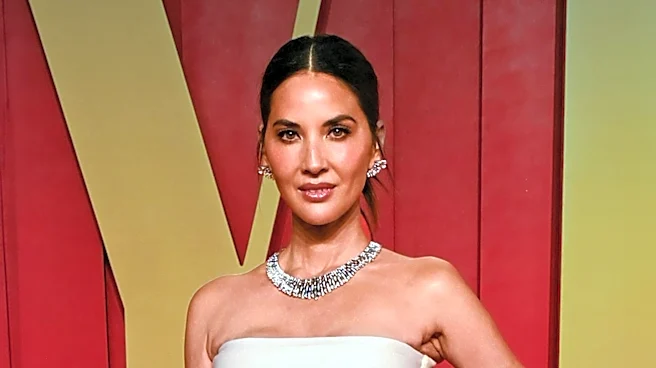
Actress Olivia Munn has openly shared her experiences with postpartum anxiety, difficulties with breastfeeding, and her breast cancer diagnosis on the inaugural season of the Allure Perspectives podcast. Munn, who gave birth to her son Malcolm at age
41, was diagnosed with postpartum breast cancer in April 2023, less than a year and a half after childbirth. She described struggling with significant postpartum anxiety, particularly financial concerns, which she found unexpected compared to the more commonly discussed postpartum depression. Munn also recounted her struggles with milk production despite extensive efforts and societal pressure to breastfeed, ultimately opting for formula when her son was not getting enough nourishment. Her breast cancer journey involved five surgeries, including procedures that induced menopause, and she is now advocating for a bill with Senator Mark Kelly of Arizona to make a specific breast cancer risk assessment tool part of standard medical care.
Why It's Important?
Olivia Munn's candid discussion sheds light on several critical, yet often under-addressed, aspects of women's health in the U.S. Her experience with postpartum anxiety highlights the need for broader awareness and support for mental health challenges beyond depression in the postpartum period. Her transparency about breastfeeding difficulties challenges the pervasive 'breast is best' narrative, which can create immense pressure and guilt for new mothers, advocating for a more realistic and supportive approach to infant feeding. Furthermore, her advocacy for the Tyrer-Cuzick risk model underscores the importance of advanced screening methods for breast cancer, particularly for women who may not fit traditional risk profiles. This could lead to earlier detection and improved outcomes, potentially influencing healthcare policies and insurance coverage for such assessments across the country.
What's Next?
Munn's ongoing collaboration with Senator Mark Kelly of Arizona to introduce legislation aims to integrate the Tyrer-Cuzick risk model into standard medical care. If successful, this initiative could significantly alter breast cancer screening protocols nationwide, potentially leading to earlier diagnoses for many women. Her continued public sharing of her health journey through platforms like the Allure Perspectives podcast is expected to further destigmatize discussions around postpartum mental health, breastfeeding challenges, and cancer. This could encourage more women to seek help and advocate for their own health needs, while also prompting healthcare providers to adopt more comprehensive and individualized approaches to women's health.
Beyond the Headlines
Munn's story touches on deeper societal expectations placed on women, particularly new mothers. The pressure to breastfeed, often fueled by social media and cultural norms, can lead to feelings of inadequacy and failure when biological realities intervene. Her experience with postpartum anxiety also reveals a gap in public understanding and medical discourse, where depression is often the sole focus, leaving other forms of distress unacknowledged. Her proactive approach to her cancer diagnosis, including surgical menopause and advocating for policy change, highlights the evolving landscape of patient empowerment and the critical role individuals can play in shaping public health initiatives. This narrative encourages a re-evaluation of how society supports women through major life transitions, from childbirth to serious health crises.