


What's Happening?
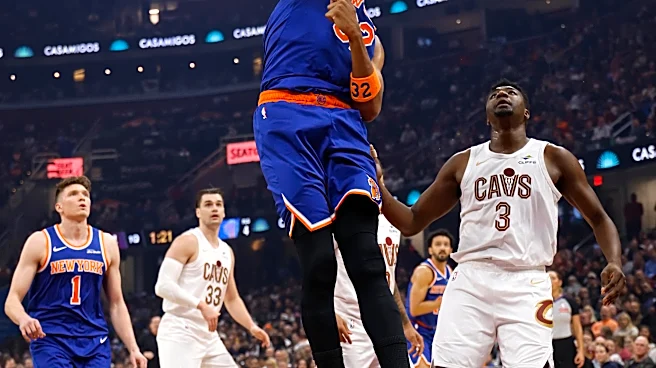
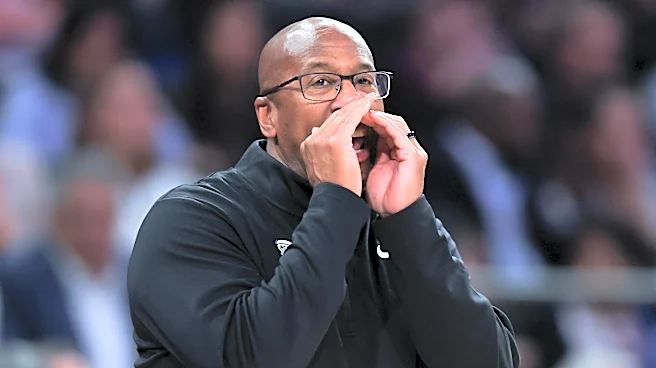
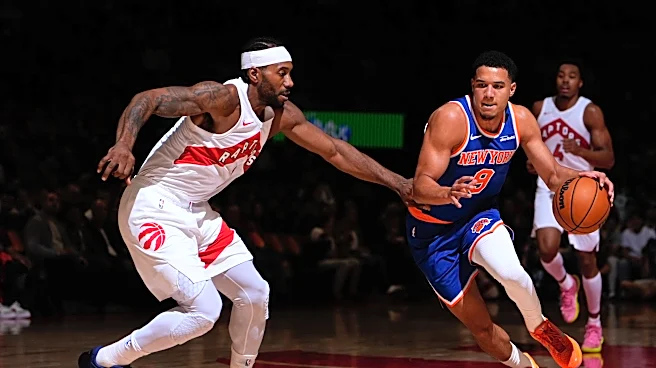
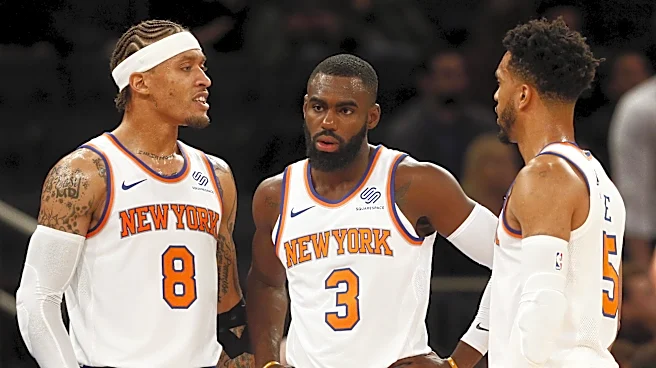
James Dolan, governor of the New York Knicks, has opted to delay contract extensions for three key players: Karl-Anthony Towns, Josh Hart, and Miles McBride. This decision comes after the Knicks secured the 2026 NBA Championship. Dolan publicly stated
on WFAN that exceeding the NBA's salary cap's second apron would be 'strategic suicide,' a self-imposed budgetary limit that complicated offseason negotiations. Both Towns and Hart expressed discomfort regarding the lack of long-term security before the 2026-27 regular season commenced, with Towns questioning what more he needed to prove. The Knicks' official stance is that these negotiations were postponed to allow players to focus on defending their title. However, the delay also aligns with the team's cautious approach to the second apron, a financial constraint that many NBA teams are treating as a hard cap. This strategy has inadvertently motivated the un-extended players to perform exceptionally well, potentially increasing their market value.
Why It's Important?
This strategic delay in contract extensions by James Dolan has significant implications for the New York Knicks' roster stability and financial future. By avoiding immediate maximum value extensions, Dolan aims to manage the team's salary cap more effectively, particularly in light of the NBA's second apron rules. This approach could save the team substantial money in the short term, but it also carries the risk of players pricing themselves out of New York's reach if their performance continues to excel. The current situation has created a strong incentive for Towns, Hart, and McBride to perform at their peak, which could be a contributing factor to the team's on-court success. However, it also creates uncertainty for the players, who are seeking long-term security. The Knicks' decision reflects a broader trend in the NBA where teams are increasingly wary of exceeding the second apron, potentially reshaping how player contracts and team budgets are managed across the league.
What's Next?
The immediate future will likely see continued high-level performance from Karl-Anthony Towns, Josh Hart, and Miles McBride as they aim to solidify their market value. If their exceptional play continues throughout the season, especially if it leads to another deep playoff run or championship, the Knicks will face a more expensive proposition when negotiations resume. The team will need to weigh the financial implications of offering potentially higher contracts against the desire to retain a championship-winning core. Other NBA teams, also cautious about the second apron, may not have the cap space to compete for these players, which could work in the Knicks' favor. However, if the players' market value significantly increases, Dolan's initial cost-saving measure might result in higher future expenditures. The upcoming offseason will be critical for the Knicks as they navigate these complex contract situations and attempt to maintain their competitive edge.
Beyond the Headlines
The Knicks' handling of these contract extensions highlights a deeper tension between financial prudence and player loyalty in professional sports. While James Dolan's strategy might be seen as a shrewd business move to optimize the team's budget, it also places additional pressure on players who have just contributed to a championship. This situation could influence future player-team dynamics across the NBA, as players might become more assertive in seeking early extensions or guaranteed long-term deals. The perceived 'ruthless efficiency' of this approach, while potentially beneficial for the team's bottom line and on-court motivation in the short term, could also impact player morale and the team's reputation as a desirable destination for free agents in the long run. It underscores the evolving financial landscape of the NBA, where salary cap restrictions increasingly dictate strategic decisions beyond just on-court performance.