





What's Happening?
ABS and lomarlabs have formalized a Master Research Collaboration Agreement (MRCA) to foster the development and adoption of innovative solutions aimed at reducing emissions, enhancing fuel efficiency, and automating operations within the maritime industry.
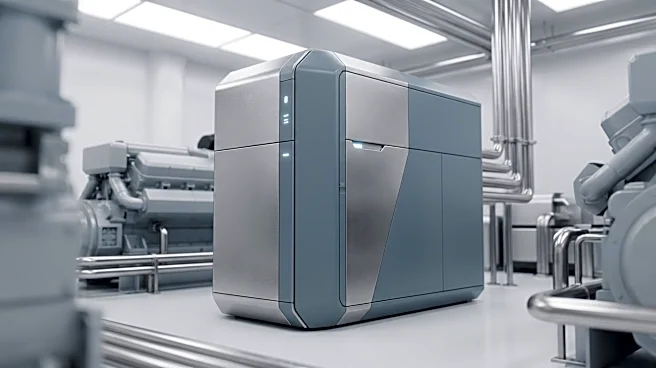
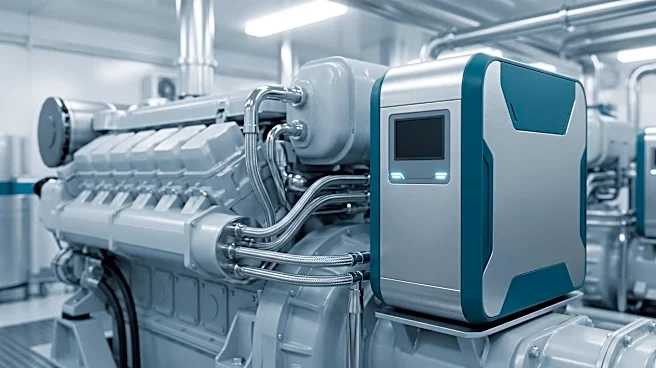
This agreement establishes a framework for both organizations to share expertise and advisory services, engaging with early-stage technology companies. The goal is to support the research, development, and testing of novel solutions for maritime applications. The first project under this MRCA involves a collaboration with Blaze Energy to pilot a next-generation, compact, engine-integrated fuel reformer. This reformer is designed to accelerate the practical adoption of alternative fuels in commercial shipping, providing vessel operators with fuel flexibility and stronger regulatory compliance.
Why It's Important?
This partnership is crucial for the U.S. and global maritime industry as it addresses the urgent need for decarbonization and operational efficiency. The maritime sector is a significant contributor to global emissions, and the development and rapid deployment of alternative fuel technologies are vital for meeting international environmental targets. By focusing on early-stage innovations, ABS and lomarlabs are helping to bridge the gap between laboratory-proven concepts and vessel-proven solutions, which is often a major hurdle for new technologies. This initiative can accelerate the transition to cleaner shipping, benefiting U.S. ports, shipping companies, and the broader supply chain by promoting sustainable practices and potentially reducing operational costs associated with fuel consumption and regulatory compliance. The collaboration also highlights the importance of industry partnerships in driving technological advancements and addressing complex environmental challenges.
What's Next?
The immediate next step is the pilot project with Blaze Energy, which will focus on demonstrating the performance of their Flex-Fuel Reformer under real operating conditions at sea. This pilot is intended to provide a structured and accelerated path toward full regulatory approval for the technology. Following successful pilot programs, the MRCA aims to facilitate the broader commercial deployment of these innovative solutions across the maritime industry. This will involve continued collaboration with startups, further research and development, and the establishment of robust standards that support innovation while maintaining safety and environmental protection. The success of these early projects could pave the way for more widespread adoption of alternative fuels and advanced operational technologies, influencing future regulatory frameworks and investment in green maritime solutions.
Beyond the Headlines
This collaboration signifies a deeper shift in how the maritime industry approaches innovation and sustainability. Historically, regulatory frameworks have evolved slowly, often lagging behind technological advancements. This partnership, however, emphasizes a proactive and collaborative approach between innovators, regulators, and classification societies. It acknowledges that emerging technologies require a more agile and iterative process for development and approval. The ethical implication lies in the industry's responsibility to mitigate its environmental impact, and this initiative demonstrates a commitment to that. Legally, the development of new technologies will necessitate the evolution of existing maritime laws and standards to accommodate novel fuels and operational methods. Culturally, it represents a move towards a more environmentally conscious and technologically advanced shipping industry, potentially inspiring other heavy industries to adopt similar collaborative models for sustainable innovation.