
What's Happening?
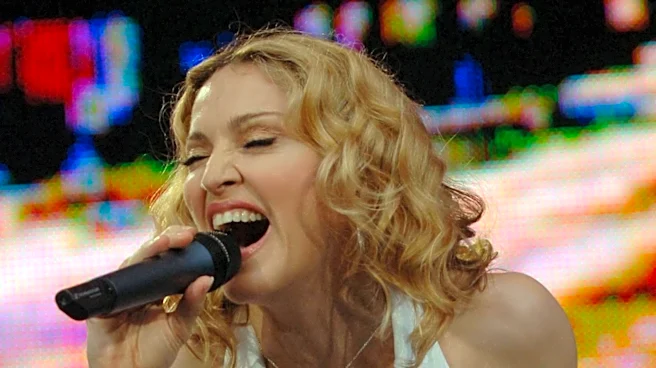
Madonna's 1986 hit single, 'Papa Don't Preach,' remains a popular song, frequently listened to and sung along to by individuals, particularly in private settings like cars. The song, released in June 1986,
rapidly ascended the charts, moving from No. 42 to No. 6 within a month. By August 16, 1986, which coincided with Madonna's birthday, 'Papa Don't Preach' had achieved the No. 1 position on the Billboard Hot 100. The track is described as a quintessential 1980s melodrama, known for its singalong quality. Its enduring appeal is also noted through its inclusion in popular culture, such as the mid-teens series 'Glee,' which introduced the song to a newer generation. This continued engagement highlights the lasting impact of Madonna's music from that era.
Why It's Important?
The sustained popularity of 'Papa Don't Preach' underscores the enduring cultural impact of 1980s pop music and Madonna's significant role within it. For the music industry, it demonstrates how certain songs can transcend their original release period and maintain relevance across decades, influencing new audiences through various media. This longevity can contribute to continued revenue streams through streaming, licensing, and renewed interest in an artist's back catalog. For society, the song's continued resonance reflects a nostalgic appreciation for the music of the 1980s, often associated with personal memories and a distinct cultural period. The ability of a song to be rediscovered and enjoyed by subsequent generations, as seen with its appearance in 'Glee,' highlights the power of media to reintroduce and recontextualize classic works, ensuring their place in popular culture.
What's Next?
The continued appreciation for songs like 'Papa Don't Preach' suggests that artists from the 1980s, particularly those with iconic hits, may see sustained interest in their music. This could lead to further re-releases, special editions, or inclusion in new media projects, such as films, television shows, or video games, which often seek to evoke nostalgia or introduce classic tracks to younger audiences. For Madonna, this enduring popularity reinforces her status as a pop icon and could influence future retrospective projects or tours that lean into her extensive catalog of hits. The trend also indicates a potential for other 1980s artists to experience similar resurgences in popularity, driven by both nostalgic fans and new listeners discovering the music through various platforms.
Beyond the Headlines
The lasting appeal of 'Papa Don't Preach' and other 1980s hits points to a broader cultural phenomenon where music from past decades continues to hold significant value and influence. This goes beyond simple nostalgia, suggesting that certain musical compositions possess timeless qualities that resonate across different eras. Ethically, it raises questions about the preservation and reinterpretation of cultural artifacts, as older music is constantly being re-evaluated and integrated into contemporary contexts. Legally, the continued use and licensing of these songs in new media highlight the ongoing importance of intellectual property rights for artists and their estates. Culturally, it demonstrates how music can serve as a powerful link between generations, fostering shared experiences and understanding across different age groups, as classic songs are passed down or rediscovered through new avenues.