




What's Happening?
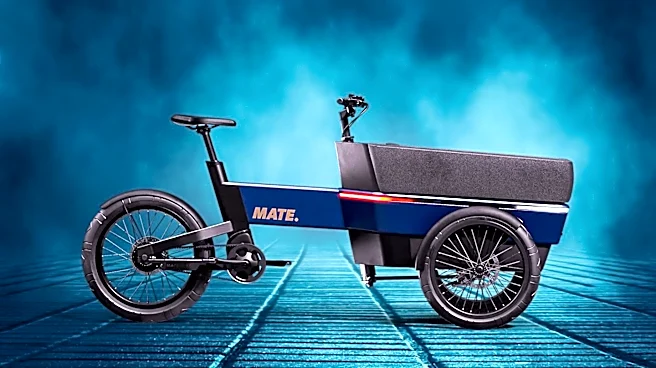
Amazon is introducing over 25 electric cargo bikes in Culver City, California, as part of an initiative to alleviate traffic congestion and reduce environmental impact in Southern California. These cargo bikes are designed to handle approximately 240
packages per shift with a single restocking stop, traveling up to 12 miles per hour. Each bike is equipped with rear-facing cameras, regenerative braking, and automatic parking brakes. Amazon highlights the small carbon footprint of these bikes and their ability to utilize bike lanes, which helps to reduce the number of delivery vans on crowded city streets. This strategy aims to lower noise pollution, decrease congestion, and minimize the presence of oversized delivery vehicles in residential areas. The company has previously implemented electric cargo bikes in more than 50 European cities, with Burbank expected to be the next California city to receive a similar fleet.
Why It's Important?
The deployment of electric cargo bikes by Amazon in Culver City represents a significant step towards sustainable urban logistics and addresses critical issues like traffic congestion and air quality in densely populated areas. By reducing reliance on traditional delivery vans, Amazon aims to mitigate its environmental impact, aligning with its broader Climate Pledge to achieve net-zero carbon emissions by 2040. This initiative also offers a practical solution to the challenges of limited curb space and street-level bottlenecks common in urban environments. Furthermore, the use of cargo bikes expands employment opportunities, as riders do not require a driver's license, potentially diversifying the workforce for delivery services. This model could serve as a blueprint for other companies seeking to optimize last-mile delivery in urban settings while promoting eco-friendly transportation.
What's Next?
Following the initial rollout in Culver City, Amazon plans to expand its electric cargo bike fleet to Burbank, California, indicating a broader strategy for urban delivery in the state. The company will likely assess the operational efficiency, environmental benefits, and community impact of these bikes to inform future deployments in other U.S. cities. This initiative could encourage other logistics companies to explore similar sustainable delivery methods, potentially leading to a wider adoption of electric cargo bikes in urban centers. Local governments and urban planners may also consider adjusting infrastructure to better accommodate these types of vehicles, such as expanding bike lanes and dedicated delivery zones. The success of this program could accelerate the shift towards greener and more efficient urban delivery ecosystems.
Beyond the Headlines
The introduction of electric cargo bikes by Amazon touches upon several deeper implications beyond immediate delivery efficiency. It highlights the evolving nature of urban infrastructure and the need for cities to adapt to new forms of transportation and logistics. This shift could lead to a re-imagining of urban spaces, with a greater emphasis on pedestrian and cyclist-friendly environments. Ethically, it raises questions about the working conditions and safety of cargo bike riders, who operate in potentially challenging urban traffic. Culturally, it could normalize the sight of non-traditional delivery vehicles, influencing public perception of urban commerce and sustainability. The long-term success of such initiatives will depend on a collaborative effort between private companies, local governments, and communities to create integrated and sustainable urban delivery solutions.