






What's Happening?
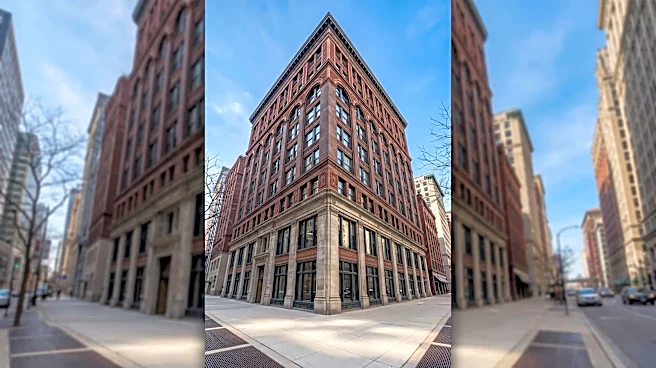
R2 Cos. and Lagfin have successfully completed the conversion of seven upper floors of a 14-story building at 79 W. Monroe in downtown Chicago's Loop from vacant office space into residential units. This project, historically known as the Rector Building
and completed in 1905 by architect Jarvis Hunt, now offers 76 market-rate units and 41 affordable units, comprising studios, one-bedrooms, and two-bedrooms. The building features rooftop amenities including an indoor tenant lounge, a fitness center, and outdoor space. This development marks the first completed project under the city's LaSalle Street Reimagined initiative, an urban planning effort aimed at repurposing aging downtown office buildings for new uses. Ware Malcomb's Chicago office provided architecture and interior design, while Leopardo Cos. and GMA Construction Group served as general contractors.
Why It's Important?
The completion of the 79 W. Monroe conversion is a significant milestone for Chicago's urban development strategy, particularly for the LaSalle Street Reimagined initiative. This project demonstrates the feasibility of transforming underutilized office spaces into much-needed housing, addressing both the increasing vacancy rates in downtown office buildings and the demand for residential units. The inclusion of both market-rate and affordable units contributes to a more diverse housing stock in the city's core. For developers and lenders, this serves as a crucial case study, providing tangible data on the successful delivery of mixed-income office-to-residential conversions at scale within Chicago. This model could encourage further investment and similar projects, revitalizing downtown areas and fostering economic growth.
What's Next?
The success of the 79 W. Monroe conversion is expected to provide momentum for other projects under Chicago's LaSalle Street Reimagined initiative. This completed project offers a blueprint and a proof of concept for future office-to-residential conversions, potentially attracting more developers and investors to participate in similar urban revitalization efforts. City officials will likely analyze the outcomes of this project, including its impact on local demographics, economic activity, and the overall success of the mixed-income housing model. The initiative aims to continue transforming aging downtown office stock, and this initial success could accelerate the pace of such conversions, contributing to a more vibrant and resident-friendly downtown Chicago.
Beyond the Headlines
This conversion project highlights a broader national trend of repurposing commercial real estate in response to evolving work patterns and housing demands. The transformation of historic buildings like the Rector Building not only provides new housing but also preserves architectural heritage, integrating the past with the future of urban living. The emphasis on mixed-income units addresses critical social equity concerns, ensuring that downtown revitalization benefits a wider range of residents. This approach could set a precedent for other major U.S. cities facing similar challenges with vacant office spaces and housing shortages, fostering sustainable urban development and creating more dynamic, mixed-use city centers.