




What's Happening?
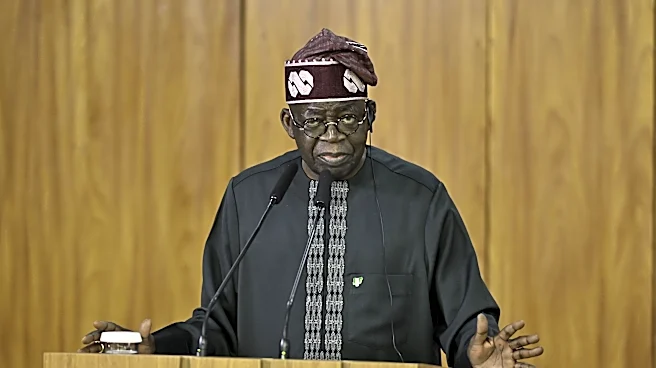
Anambra State Governor, Professor Chukwuma Charles Soludo, stated that Nigeria's current economic growth rate of approximately four percent is inadequate to significantly reduce poverty, create sufficient jobs, or accelerate the country's industrial transformation.
Speaking at a book presentation in Abuja, Soludo, a former Governor of the Central Bank of Nigeria (CBN), acknowledged that President Bola Tinubu's administration has stabilized the economy but emphasized the need for sustained double-digit growth. He argued that achieving a $1 trillion economy within the next few years would necessitate growth rates of at least double digits, requiring investments exceeding 30 percent of GDP, compared to the current 17 percent. Soludo highlighted that Nigeria has transitioned from an agriculture-dominated economy to a service-driven one without developing a robust industrial base, with manufacturing remaining stagnant at about eight percent of GDP for the past 56 years. He warned that the country's rapidly expanding population, with 70 percent under 30, demands urgent attention to employment, education, healthcare, and housing.
Why It's Important?
This assessment by Governor Soludo underscores a critical challenge for Nigeria's economic future and its ability to provide for its rapidly growing population. The stagnation of the manufacturing sector, despite a shift towards services, indicates a 'missing middle' in the country's economic diversification efforts. This imbalance limits job creation, particularly for the large youth demographic, and hinders sustainable economic transformation. The call for double-digit growth and substantial investment highlights the significant gap between current economic performance and the development needs of the nation. If these issues are not addressed, Nigeria risks exacerbating poverty, unemployment, and social instability, potentially impacting regional stability and international development goals. The emphasis on industrialization is crucial for creating productive employment and building a resilient economy that can support its projected population of 400 million within three decades.
What's Next?
Governor Soludo urged President Tinubu's administration to sustain economic reforms and avoid sacrificing long-term economic transformation for short-term political popularity, especially with the 2027 general elections approaching. He called for stronger revenue mobilization, increased private-sector investment, and a development strategy capable of attracting substantial capital. Soludo also advocated for greater patronage of locally manufactured products to stimulate domestic demand, investment, and job creation. The government is expected to consider these recommendations to address the identified economic shortcomings. The focus will likely be on implementing policies that encourage industrialization, attract foreign direct investment, and improve the ease of doing business to foster a more robust and inclusive economic growth trajectory. The success of these efforts will be critical in determining Nigeria's ability to lift millions out of poverty and provide essential services for its burgeoning population.
Beyond the Headlines
The economic challenges highlighted by Governor Soludo extend beyond mere statistics, touching upon fundamental issues of national self-reliance and long-term sustainability. The 'missing middle' in Nigeria's economic structure, where the country bypassed industrialization to move from agriculture to services, represents a significant structural flaw that has profound societal implications. This lack of a strong manufacturing base means fewer opportunities for skilled labor, limited technological advancement, and continued reliance on imports, which can strain foreign exchange reserves. Ethically, the failure to create sufficient jobs for a young and growing population raises concerns about social equity and the potential for unrest. Culturally, a robust manufacturing sector can foster national pride and self-sufficiency. The call for increased local patronage also speaks to a broader need for national consciousness and collective commitment to economic development, suggesting a shift in consumer behavior and government procurement policies could be vital for fostering sustainable growth.