






What's Happening?
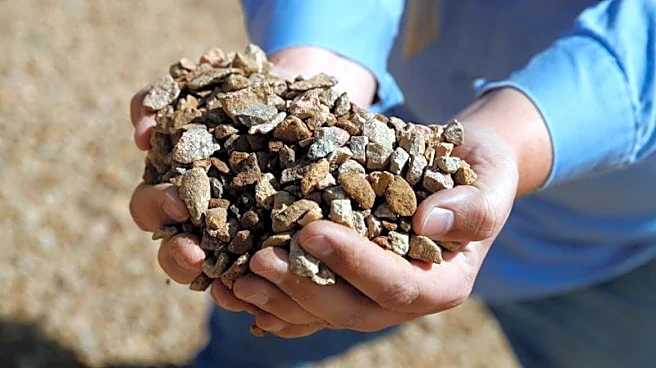
The U.S. International Development Finance Corporation (DFC) has committed up to $4.84 million to a rare earths project in Madagascar, operated by Harena Rare Earths Plc. This investment is part of a broader U.S. strategy to diversify critical mineral
supply chains away from China, which currently dominates over 70% of global rare earth production. The Ampasindava project aims to produce approximately 4,000 metric tons of rare earth oxides annually by mid-2028, including high-value magnet materials like Neodymium-Praseodymium and Dysprosium-Terbium. Harena Rare Earths is in the process of obtaining necessary permits and conducting environmental and social impact studies, with commercial production expected in the coming years.
Why It's Important?
This investment marks a significant step in the U.S.'s efforts to reduce reliance on China for critical minerals essential for various technologies, including electric vehicles, wind turbines, and defense systems. By supporting projects like Ampasindava, the U.S. aims to create a more resilient and diversified supply chain for rare earths, which are crucial for national security and technological advancement. The move also signals a strategic shift towards securing alternative sources of these minerals, potentially reducing geopolitical risks associated with China's dominance in the sector.
What's Next?
As Harena Rare Earths progresses through the permitting and development phases, the U.S. will likely continue to monitor and support similar projects globally to further diversify its rare earth supply chain. The success of the Ampasindava project could encourage additional investments in rare earth mining outside of China, potentially leading to a more balanced global market. However, challenges such as political stability, infrastructure development, and scaling production remain significant hurdles that need to be addressed to achieve the project's ambitious mid-2028 production target.