





What's Happening?
Oil prices showed a modest recovery after recent declines, with Brent crude futures rising slightly to $79.67 a barrel and U.S. West Texas Intermediate crude increasing to $75.88 a barrel. This comes after steep losses earlier in the week, driven by hopes
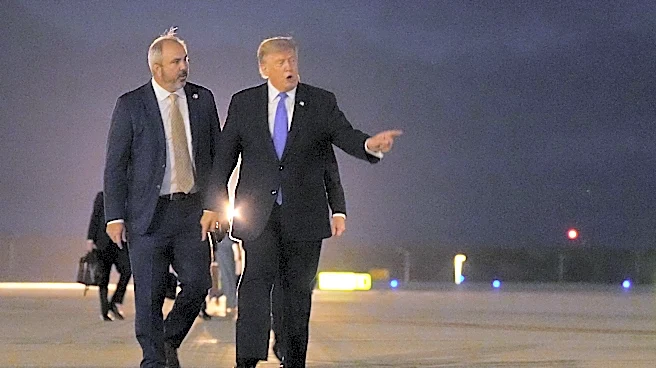
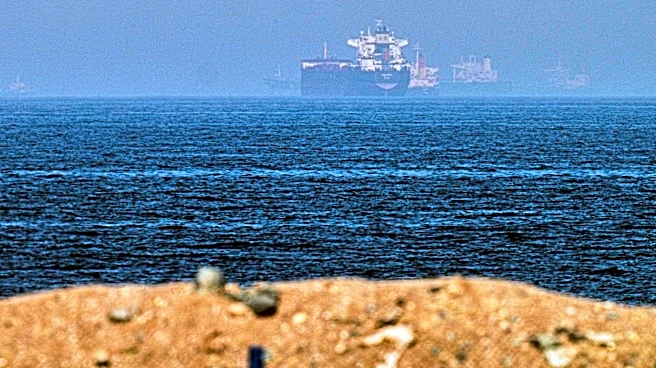
of resolving the U.S.-Iran conflict and restoring shipping through the Strait of Hormuz. Despite these hopes, Iran has denied engaging in direct talks with the U.S., contradicting President Trump's claims of ongoing negotiations. The blockade of the Strait of Hormuz, a vital passage for global oil and liquefied natural gas, continues to keep investors on edge. Market participants are also awaiting U.S. inventory data, which could further influence oil prices.
Why It's Important?
The ongoing disruption in the Strait of Hormuz has significant implications for global energy markets, as it is a critical route for oil transportation. Any resolution to the blockade could stabilize oil prices and reduce volatility in energy markets. For the U.S., this situation affects both domestic energy policy and international relations, particularly with Middle Eastern countries. The potential for a diplomatic resolution could ease geopolitical tensions and impact global oil supply chains. Additionally, changes in oil prices can have wide-ranging effects on the U.S. economy, influencing everything from consumer prices to industrial production costs.
What's Next?
The market is closely watching for any developments in the U.S.-Iran negotiations, as a resolution could lead to a significant shift in oil prices. The release of U.S. inventory data will also be a key factor in determining short-term price movements. Stakeholders, including oil companies and governments, will need to prepare for potential changes in supply dynamics. The situation remains uncertain, with the possibility of further diplomatic efforts or escalations in the region.