




What's Happening?
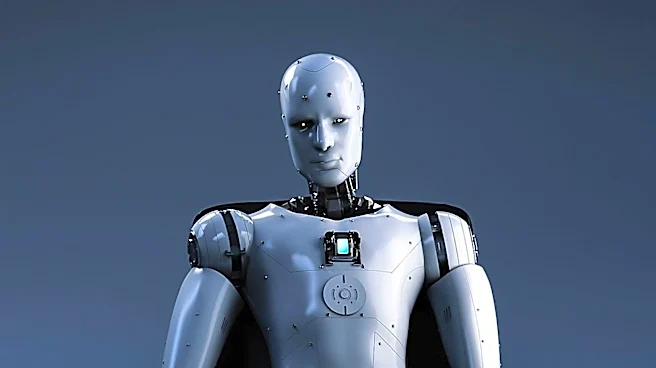
The Embodied AI robot large model market is experiencing rapid expansion, driven by advancements in technology architectures, industrial ecosystems, and commercialization strategies. A new research report highlights the industry's shift from research and development
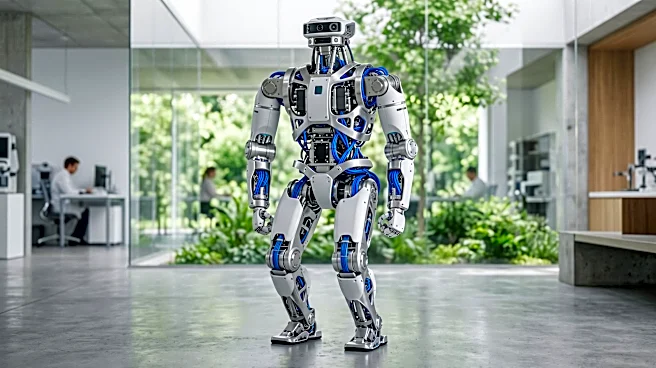
to mass production and real-world applications. Key technology leaders, including Alibaba Group, NVIDIA, Google DeepMind, OpenAI, Microsoft, Huawei, Tencent RoboticsX, Baidu, ByteDance, iFlytek, and SenseTime, are actively involved. The report also evaluates 10 robot companies such as UBTECH Robotics, Unitree Robotics, and FigureAI. A significant trend identified is the emergence of world models as a crucial technology direction. These models are being incorporated to enhance robots' perception, decision-making, and execution capabilities by supporting multi-step state prediction, action planning, simulation, and evaluation before physical execution. This adoption is accelerated by the high cost of collecting real-world robot interaction data, the need for improved performance in unfamiliar environments, and the integration of high-level planning with low-level motion execution.
Why It's Important?
The acceleration of Embodied AI robot commercialization, particularly through world models and OEM investment, signifies a major technological leap with profound implications for U.S. industries. The integration of world models, which generate synthetic data and improve predictive capabilities, can significantly reduce development costs and time for AI robots, making them more accessible and versatile. OEM participation, leveraging industrial data, production environments, and established supply chains from sectors like automotive, can drastically lower hardware and deployment costs while enhancing reliability and manufacturing efficiency. This convergence of AI and robotics, with strong OEM involvement, could revolutionize manufacturing, logistics, healthcare, and service industries in the U.S., leading to increased automation, productivity, and potentially new job categories. However, it also raises questions about workforce displacement, the need for new skills, and the ethical deployment of autonomous systems in various societal contexts.
What's Next?
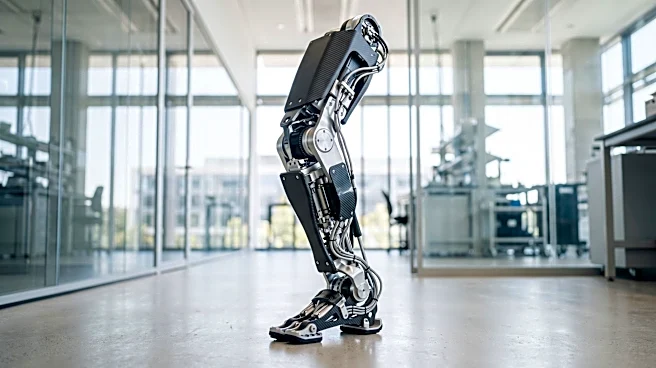
The report indicates that world models, cross-platform deployment, open-source ecosystems, and OEM participation will define the next phase of the Embodied AI robot market. These trends are expected to improve model performance, expand real-world validation, and accelerate the transition from prototype development to scalable commercial production. OEMs, including major automotive companies like Tesla, Toyota, Honda, and Hyundai, are positioned to drive commercialization by transferring technologies such as BEV perception, multi-modal fusion, and end-to-end decision algorithms to robot development. The overlap in supply chains for components like batteries, motors, and sensors between automotive and robotics is anticipated to further reduce costs and improve efficiency. This suggests a future where Embodied AI robots become more prevalent across various sectors, with continuous advancements in their capabilities and broader integration into daily life and industrial operations.
Beyond the Headlines
The rise of Embodied AI robots, particularly with the integration of world models, represents a fundamental shift in how AI interacts with the physical world. This development moves beyond purely digital AI applications to systems that can perceive, understand, and act within complex physical environments. The ethical implications are substantial, as these robots gain more autonomy and decision-making capabilities. Questions around accountability, safety, and the potential for unintended consequences will become increasingly critical. Furthermore, the economic impact could be transformative, potentially leading to a redefinition of labor and the creation of entirely new industries. The collaboration between AI developers and traditional OEMs also highlights a growing interdisciplinary approach to technological innovation, blurring the lines between software, hardware, and manufacturing sectors.