





What's Happening?
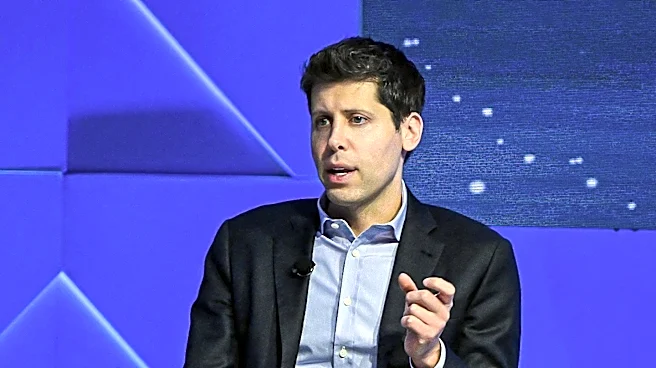
Peter Steinberger, the creator of the OpenClaw agent project, joined OpenAI in February 2026. Sam Altman, OpenAI's CEO, lauded Steinberger as a 'genius' with 'amazing ideas about agents,' indicating that his work is expected to become central to OpenAI's product
development. Steinberger reportedly developed the initial version of OpenClaw in approximately one hour using a method referred to as 'vibe coding.' However, the project has drawn scrutiny, with the analyst firm Gartner rating OpenClaw an 'unacceptable cybersecurity risk' and advising businesses to either isolate or block its use. While the source notes that a video claimed Steinberger does not review the code he ships, this specific assertion could not be independently verified. The recruitment highlights OpenAI's focus on advancing agent technology despite the cybersecurity warnings associated with Steinberger's prior work.
Why It's Important?
This development is significant for the U.S. technology sector, particularly in the realm of artificial intelligence and cybersecurity. OpenAI's acquisition of a talent like Steinberger, known for rapid development in agent technology, signals an aggressive push into this area. The integration of OpenClaw's underlying principles or Steinberger's expertise into OpenAI's core products could lead to advancements in AI capabilities, potentially offering new tools for businesses and developers. However, Gartner's classification of OpenClaw as an 'unacceptable cybersecurity risk' raises critical questions about the balance between innovation and security. If OpenAI incorporates elements of OpenClaw or similar 'vibe coding' methodologies without robust security protocols, it could expose users and organizations to significant vulnerabilities. This situation underscores the growing tension between the rapid pace of AI development and the need for thorough security assessments, impacting how U.S. companies adopt and trust new AI solutions.
What's Next?
The immediate next steps will likely involve OpenAI integrating Peter Steinberger into its research and development teams, focusing on agent technology. It remains to be seen how OpenAI will address the cybersecurity concerns raised by Gartner regarding OpenClaw. The company may choose to re-engineer or significantly modify the underlying principles of OpenClaw to meet industry security standards before incorporating them into its products. This situation could also prompt a broader discussion within the AI community and regulatory bodies about the security implications of rapidly developed AI agents. Businesses and cybersecurity firms will likely monitor OpenAI's future releases closely for any signs of OpenClaw's influence and the measures taken to mitigate potential risks. The incident could also influence future hiring practices in the AI sector, emphasizing not only innovative capabilities but also a strong understanding of security best practices.
Beyond the Headlines
The recruitment of Peter Steinberger and the associated cybersecurity warnings for OpenClaw highlight a deeper ethical and practical dilemma in the fast-evolving field of AI development. The concept of 'vibe coding'—rapid, intuitive development—while potentially accelerating innovation, may inadvertently bypass rigorous security and quality assurance processes. This raises questions about the responsibility of AI developers and companies to ensure the safety and reliability of their creations, especially when these tools are intended to become 'core' to widely used products. The tension between speed of development and the need for thorough vetting could lead to a re-evaluation of development methodologies and the role of human oversight in AI-generated code. Furthermore, the incident underscores the challenge of regulating and standardizing AI technologies that are developed at an unprecedented pace, potentially triggering debates on new regulatory frameworks or industry best practices to ensure secure and ethical AI deployment.