







What's Happening?
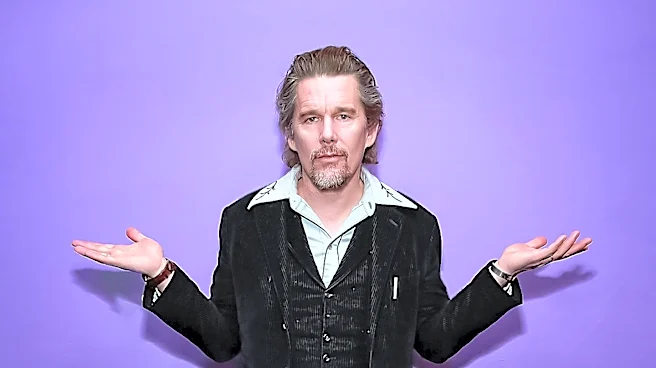
Ethan Hawke stars as lyricist Lorenz Hart in Richard Linklater’s biographical dramedy, 'Blue Moon.' Set in the 1940s, the film explores Hart's experiences as his creative partner, Richard Rodgers (played by Andrew Scott), achieves greater success without
him. The narrative unfolds on the opening night of Rodgers’ 'Oklahoma!', where Hart attempts to reconnect with Rodgers, charm a young woman named Elizabeth Weiland (Margaret Qualley), and engage with others at a bar. The film is described as a deeply moving and at times depressing portrayal of Hart's struggles, including his longing for love, his desire for a second chance, and his self-sabotaging tendencies. Critics have particularly lauded Hawke's performance, noting his ability to disappear into the role and convey Hart's humanity, vices, and desperation. The movie also features Bobby Cannavale as a bartender, whose subtle expressions convey empathy for Hart.
Why It's Important?
The film's exploration of Lorenz Hart's life offers a significant cultural and historical perspective on a pivotal figure in American musical theater. Hart, as half of the Rodgers and Hart songwriting duo, contributed to numerous iconic works, and his personal struggles, as depicted in 'Blue Moon,' shed light on the often-complex lives of creative artists. Ethan Hawke's acclaimed performance could bring renewed attention to Hart's legacy and the golden age of Broadway. The film's critical reception, particularly the praise for Hawke, underscores the enduring appeal of well-crafted biographical dramas that delve into the human condition. For the entertainment industry, 'Blue Moon' exemplifies the potential for character-driven narratives to resonate deeply with audiences, highlighting the importance of strong acting and nuanced storytelling in conveying historical figures' complexities.
What's Next?
Given the critical acclaim for Ethan Hawke's performance, 'Blue Moon' is likely to be a strong contender during awards season, potentially earning nominations for Hawke and other cast members, as well as for director Richard Linklater. The film's release could spark renewed interest in the works of Rodgers and Hart, leading to increased viewership of their classic musicals and a deeper appreciation for their contributions to American culture. Audiences can anticipate a powerful and emotionally resonant cinematic experience, with discussions likely to focus on the film's portrayal of artistic collaboration, personal struggles, and the bittersweet nature of success and regret. The film's success may also encourage further exploration of lesser-known aspects of historical figures in future biographical projects.
Beyond the Headlines
Beyond its immediate narrative, 'Blue Moon' delves into profound themes of artistic identity, the challenges of collaboration, and the personal cost of creative genius. Lorenz Hart's story, as presented, highlights the often-overlooked struggles behind celebrated artistic achievements, offering a poignant commentary on mental health, addiction, and the search for validation in a competitive field. The film's setting in the 1940s also provides a glimpse into the social and cultural landscape of the era, particularly within the entertainment world. The portrayal of Hart's internal conflicts and his inability to fully embrace his own success resonates with universal human experiences of self-doubt and the pursuit of happiness, making the film a compelling study of character and the human spirit. It prompts reflection on how society often celebrates the output of artists while overlooking their personal battles.