
What's Happening?
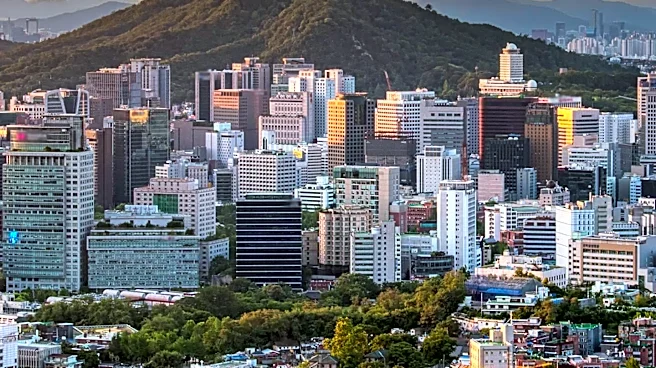
Apartment prices in the Gyeonggi Province have surpassed those in Seoul for eight consecutive weeks, leading the rise in housing prices across the Seoul metropolitan area. According to the Korea Real Estate
Agency, the weekly increase in apartment sales prices in Gyeonggi Province was 0.18 percent in the second week of September, compared to Seoul's 0.16 percent. By the first week of November, Seoul's growth rate had fallen to 0.07%, while Gyeonggi Province maintained a steady rise of 0.20%, widening the gap to 0.13 percentage points. None of Seoul's regions were among the top 10 nationwide for weekly increase rates in the first week of November, while several Gyeonggi Province areas, such as Giheung-gu (0.60%) in Yongin and Gunpo City (0.57%), were listed. This trend indicates a 'decoupling' phenomenon, where demand is shifting to less regulated areas in Gyeonggi Province, particularly those behind the semiconductor belt.
Why It's Important?
This shift in housing market dynamics within the Seoul metropolitan area has significant implications for urban development, economic planning, and residential patterns. The slowdown in Seoul's market, particularly in traditionally strong areas like Gangnam and Seocho-gu, suggests a potential saturation or a response to policy uncertainties such as tax reform. Conversely, the robust growth in Gyeonggi Province indicates a redistribution of population and investment, driven by factors like affordability and access to employment centers, including the semiconductor industry. This trend could lead to increased infrastructure development in Gyeonggi, impacting local economies and creating new opportunities for businesses and residents. For U.S. real estate investors and economists, this provides a case study of how regional markets can diverge within a major metropolitan area due to policy, economic drivers, and consumer preferences.
What's Next?
Industry experts predict that the current trend of Gyeonggi Province leading housing price increases will continue, as demand shifts from Seoul to areas with relatively lower price burdens and good access to the capital. This sustained demand in Gyeonggi Province is expected to drive further development and potentially increase property values in these regions. Conversely, Seoul's market may continue to experience a wait-and-see attitude from consumers, especially with ongoing policy uncertainties. The government and local authorities in both Seoul and Gyeonggi Province may need to consider new urban planning and housing policies to address these diverging market trends, ensuring balanced development and housing stability across the metropolitan area. The focus will likely be on managing growth in Gyeonggi while potentially stimulating demand or adjusting regulations in Seoul.
Beyond the Headlines
The 'decoupling' of housing prices between Seoul and Gyeonggi Province reflects broader socio-economic shifts, including evolving preferences for suburban living, the impact of industrial clusters (like the semiconductor belt), and the effectiveness of government housing policies. This phenomenon could exacerbate regional disparities in wealth and access to housing, potentially creating new social challenges related to commuting, public services, and community development. The increased focus on unregulated areas in Gyeonggi Province also highlights how market forces can circumvent or respond to regulatory measures in core urban centers. This situation offers insights into the complex interplay of economic growth, urban planning, and social equity in rapidly developing metropolitan regions, providing valuable lessons for other global cities facing similar pressures.