



What's Happening?
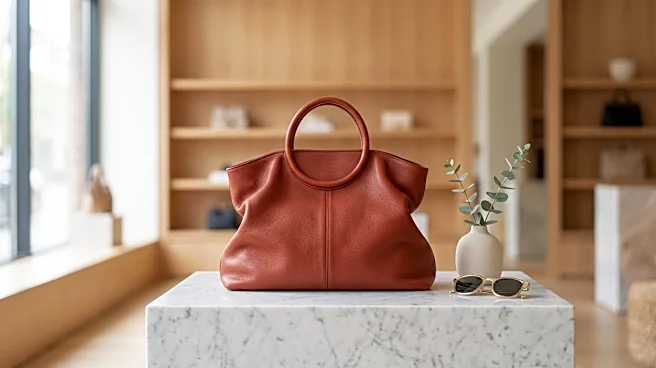
LOEWE has reinterpreted its iconic Amazona bag, notably with the introduction of the Amazona 180, which features a single rounded toron handle and a top that can fold open for a more casual appearance. This design contrasts with the Amazona 23 Cropped,
which retains two handles and a lower, more composed rectangular shape. The Amazona 180, released for LOEWE's 180th anniversary, aims to offer a softened briefcase aesthetic, allowing the upper leather to collapse into an open line. The collection includes various sizes and materials, such as soft calfskin and suede, with specific dimensions provided for the 180 Mini, 180 Medium, 23 Cropped, and 180 Large suede models. The design changes focus on construction, handle arrangement, and overall silhouette, offering different moods and functionalities for consumers.
Why It's Important?
The redesign of the LOEWE Amazona bag reflects evolving consumer preferences in the U.S. luxury handbag market, where versatility and a blend of classic and contemporary aesthetics are increasingly valued. By offering both the relaxed 180 and the more structured 23 Cropped, LOEWE caters to a wider range of styles and practical needs. This strategic move aims to maintain the brand's relevance and appeal among U.S. luxury buyers who seek both heritage and innovation. The emphasis on specific dimensions and material choices (calfskin vs. suede) allows consumers to make informed decisions based on their lifestyle and desired aesthetic, potentially driving sales in a competitive market. The price point, with a large Amazona 180 in brown suede benchmarked at approximately $5,040 USD, positions these bags as significant investment pieces for U.S. luxury consumers.
What's Next?
The market reception of the redesigned Amazona bags, particularly the 180 series, will be closely monitored by LOEWE and competitors in the U.S. luxury sector. Consumer feedback on the single-handle design, material choices, and practical utility will likely influence future product development and marketing strategies. The availability of different sizes and constructions suggests LOEWE will continue to refine its offerings to meet diverse consumer demands. Retailers will likely highlight the distinct characteristics of each model, such as the 180 Medium for everyday use or the 180 Mini for compact carrying, to guide customer choices. The brand's ability to balance its heritage with modern design elements will be key to its continued success in the U.S. luxury accessories market.
Beyond the Headlines
The evolution of the LOEWE Amazona bag underscores a broader shift in luxury fashion towards functional elegance and personalized style. The choice between a relaxed, single-handle design and a more composed, two-handle structure reflects a desire among consumers for bags that adapt to various occasions and personal expressions. This trend moves beyond mere brand recognition, focusing on how a bag integrates into a user's daily life and aesthetic. The detailed attention to materials, dimensions, and carrying options highlights a growing demand for transparency and specificity in luxury product descriptions. This approach not only empowers consumers but also challenges luxury brands to innovate while respecting their heritage, fostering a deeper connection between the product and its owner beyond fleeting trends.