






What's Happening?
As artificial intelligence (AI) continues to reshape the workplace, CEOs are grappling with how to prepare for the future of work. Many leaders are investing in technology and exploring new tools, but the long-term impact on business operations and workforce
skills remains uncertain. The focus is shifting towards creating adaptable leaders and fostering environments where innovation and human skills complement each other. The challenge lies in balancing technological advancements with workforce development to ensure that employees are equipped to thrive in an AI-driven world.
Why It's Important?
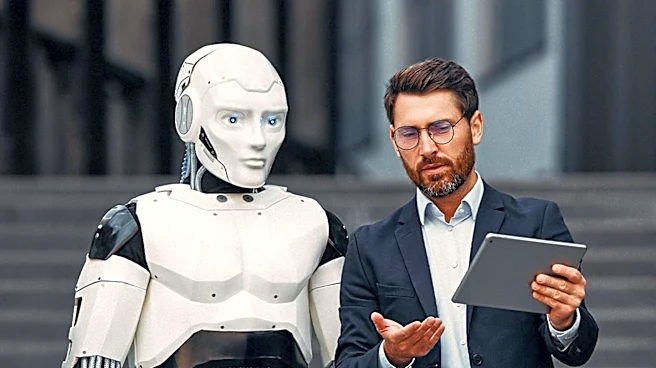
The integration of AI into the workplace presents both opportunities and challenges for businesses. While AI can enhance productivity and drive innovation, it also requires a workforce that is skilled in both technical and human capabilities. Companies that successfully navigate this transition will be better positioned to compete in the evolving business landscape. The emphasis on human potential and adaptability highlights the importance of investing in workforce development to ensure that employees can effectively collaborate with AI technologies.
What's Next?
Organizations will need to focus on building trust and confidence among employees as they adapt to new technologies. This may involve providing training and development opportunities, fostering a culture of innovation, and ensuring transparent communication about AI's role in the workplace. As the future of work continues to evolve, businesses that prioritize workforce development and adaptability will be better equipped to navigate the challenges and opportunities presented by AI advancements.