




What's Happening?
Larry Ellison, co-founder and Chief Technology Officer of Oracle, has fallen out of the world's top 10 richest individuals after Oracle's stock experienced a significant decline. On Friday, Oracle shares dropped approximately 7.5% to around $102, marking
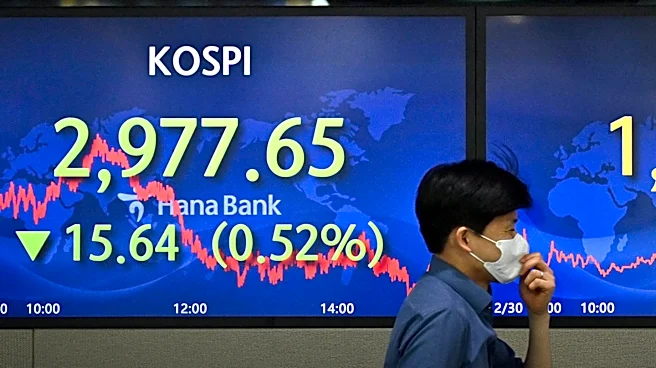
their lowest price since January 2024. This single-day decrease reduced Ellison's net worth by an estimated $7.9 billion, bringing his total fortune to $140.8 billion. The drop in Oracle's stock is part of a broader sell-off in the technology sector, particularly affecting companies linked to artificial intelligence. Other major tech firms like Micron, AMD, Broadcom, and Nvidia also saw substantial declines in their stock prices on the same day. Investors have expressed growing concerns regarding the extensive capital expenditures by major tech companies in AI infrastructure, a sentiment that has impacted Oracle since its June earnings report. Oracle reported approximately $55.7 billion in capital expenditures and a negative free cash flow of about $23.7 billion in fiscal year 2026, alongside carrying around $125 billion in accrued debt.
Why It's Important?
The significant drop in Oracle's stock and Larry Ellison's subsequent exit from the top 10 richest list highlights the volatile nature of wealth tied to major technology companies, especially those heavily invested in emerging sectors like artificial intelligence. Ellison's fortune is directly linked to Oracle's stock performance, making him particularly susceptible to market fluctuations. This event underscores investor caution regarding the substantial spending by Big Tech on AI infrastructure. The market's reaction suggests a reassessment of valuations for AI-linked technology companies, indicating that investors are scrutinizing the financial sustainability and immediate returns of these massive investments. For the broader U.S. economy and financial markets, this trend could signal a period of increased scrutiny on tech sector spending and potentially lead to a more conservative investment approach in high-growth, high-expenditure areas like AI. Companies with significant debt and large capital outlays for AI infrastructure may face increased pressure from shareholders to demonstrate clearer paths to profitability and return on investment.
What's Next?
The immediate future for Oracle and other AI-linked technology companies will likely involve continued investor scrutiny regarding their capital expenditure strategies and debt levels. Oracle's future spending plans, particularly those related to expanding its AI infrastructure and acquiring necessary chips, will remain a key point of concern for investors. The broader technology sector may experience ongoing volatility as the market continues to reassess the valuations of companies heavily invested in artificial intelligence. Shareholders of Oracle and other AI-linked tech funds may need to evaluate their portfolio exposure to this sector, considering the potential for further shifts in investor sentiment. Companies might be compelled to provide more transparent and detailed justifications for their AI investments, outlining expected returns and timelines. This could lead to a more cautious approach to capital deployment within the tech industry, potentially impacting the pace of AI development and deployment across various sectors.
Beyond the Headlines
This development extends beyond mere stock price fluctuations, touching upon deeper implications for the technology industry's investment cycles and risk assessment. The market's reaction to Oracle's spending on AI infrastructure suggests a potential shift in investor appetite from pure growth to a demand for more tangible returns and financial prudence, even in cutting-edge fields. This could lead to a re-evaluation of how venture capital and public markets fund ambitious technological advancements, particularly those requiring massive upfront investments with long-term payoff horizons. Ethically, the immense capital deployed into AI raises questions about resource allocation and the potential for market concentration among a few dominant players. Legally, increased scrutiny on financial reporting and debt management for tech giants could lead to new regulatory pressures or investor activism demanding greater accountability. Culturally, this market correction might temper the unbridled optimism surrounding AI, fostering a more pragmatic view of its development and integration into the economy.