



What's Happening?
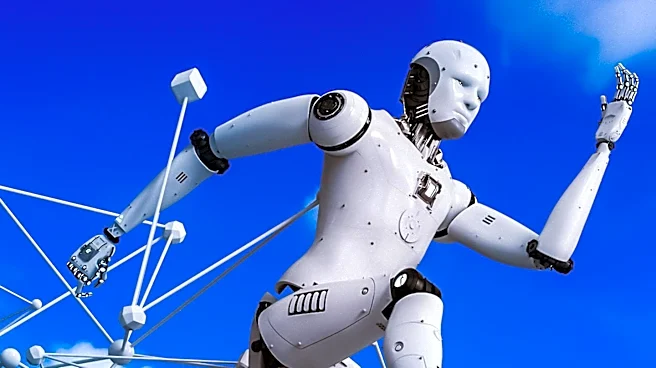
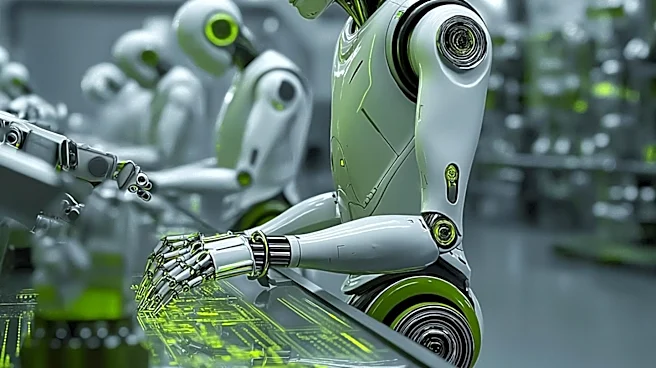
BMW Group has partnered with Figure AI to test and integrate humanoid robots into its manufacturing operations at the Spartanburg plant in the U.S. This initiative marks a significant step in bringing advanced robotics to automotive production lines.
During a 10-month pilot in 2025, Figure 02 robots supported the production of over 30,000 BMW X3 vehicles, handled more than 90,000 components, and accumulated approximately 1,250 operating hours. Following the success of this pilot, BMW is advancing to the next phase by deploying Figure 03 robots, which will be responsible for parts sorting and sequencing within production logistics. This collaboration highlights a growing trend of utilizing humanoid robots in environments designed for human workers, aiming to automate repetitive and physically demanding tasks.
Why It's Important?
The integration of humanoid robots like Figure 02 and Figure 03 into BMW's U.S. manufacturing plant signifies a pivotal shift in industrial automation. This development is crucial for the U.S. manufacturing sector as it demonstrates the potential for enhanced efficiency and productivity in automotive production. By deploying robots for repetitive material handling, parts sorting, sequencing, and other physically demanding factory tasks, companies can free up human workers to focus on roles requiring experience and judgment. This approach could lead to optimized production lines, reduced labor costs for certain tasks, and improved safety by minimizing human exposure to hazardous or strenuous activities. The success of this partnership could set a precedent for other U.S. industries facing similar labor challenges or seeking to boost operational output.
What's Next?
The deployment of Figure 03 for parts sorting and sequencing indicates a continued expansion of humanoid robot capabilities within BMW's Spartanburg plant. This next phase will likely provide further data on the robots' efficiency, adaptability, and overall impact on production logistics. Other automotive manufacturers and industrial sectors in the U.S. will closely monitor the outcomes of this expanded integration. The success of Figure 03 could accelerate the adoption of humanoid robots across various U.S. factories, leading to increased investment in AI and robotics research and development. This trend suggests a future where humans and robots collaborate more extensively in manufacturing, potentially reshaping workforce dynamics and skill requirements in the industrial sector.
Beyond the Headlines
The collaboration between BMW and Figure AI extends beyond mere automation; it represents a fundamental re-evaluation of the human-robot interface in industrial settings. The design of humanoid robots to operate in human-centric environments suggests a future where factories are not entirely redesigned for machines but rather augmented by them. This raises deeper questions about the evolution of human labor, the need for new skill sets in managing and maintaining robotic workforces, and the ethical implications of increasingly intelligent machines in the workplace. The long-term impact could include a redefinition of job roles, a potential increase in demand for specialized technical skills, and a societal discussion on the balance between technological advancement and human employment in the U.S. manufacturing landscape.