





What's Happening?
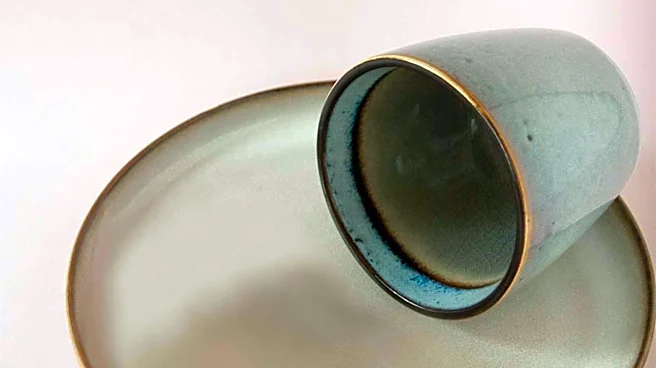
A user on GlazeShare, identified as playfulrobyn, has shared an image of a glaze labeled 'Blue Crackle.' The user noted uncertainty regarding the correct brand of the glaze, stating that they used what was available at a studio, which was simply labeled 'Blue Crackle.' This
post is part of the 'Recent Shares' section on the GlazeShare platform, a community and resource hub for glazes. The platform allows users to describe glaze combinations and search for them, and it also features sections for community interaction and resources. The 'Blue Crackle' glaze was shared alongside other glaze pictures like 'Split Rock,' indicating an active community sharing various glaze types and applications.
Why It's Important?
This sharing of glaze information, even with brand uncertainty, highlights the collaborative nature of artistic and craft communities. For potters, ceramic artists, and hobbyists, platforms like GlazeShare are crucial for discovering new techniques, glazes, and inspiration. The ability to share and view different glaze applications, even if the exact brand is unknown, can still provide valuable visual references and ideas for others. It underscores the importance of visual documentation in creative fields where specific material properties, like how a 'Blue Crackle' glaze appears, are best understood through examples. This informal sharing can also lead to community-driven identification of products or similar alternatives, fostering knowledge exchange among users.
What's Next?
The GlazeShare platform will likely continue to facilitate the sharing of various glazes and ceramic creations. Other users might comment on playfulrobyn's post, potentially offering insights into the 'Blue Crackle' glaze's brand or suggesting similar glazes. The platform's search functionality allows users to look for specific glaze combinations, which could lead to more detailed discussions or discoveries related to 'Blue Crackle' or other glazes. As more users contribute, the collective knowledge base on GlazeShare will expand, providing a richer resource for ceramic artists seeking specific aesthetic outcomes or material properties in their work.
Beyond the Headlines
The phenomenon of sharing and identifying materials like glazes in online communities reflects a broader trend in specialized hobbies and crafts. In the absence of comprehensive commercial databases or standardized labeling, peer-to-peer knowledge sharing becomes a vital mechanism for information dissemination and skill development. This informal network can democratize access to specialized knowledge, allowing individuals to learn and experiment without necessarily relying on formal education or expensive resources. The 'Blue Crackle' example, despite its ambiguity, illustrates how visual cues and community input can help bridge gaps in product identification, fostering a culture of shared learning and innovation within the ceramics community.