





What's Happening?
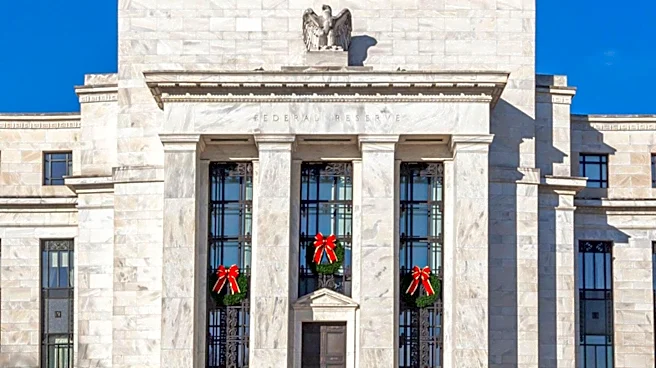
Following the release of the U.S. Personal Consumption Expenditures (PCE) data, long-term U.S. Treasury yields have remained elevated, with the 30-year yield hovering around 5.2%, a high not seen in 19 years. The Federal Reserve's recent decision to maintain
interest rates has continued to influence the bond market, with concerns over inflation and employment affecting future rate hike predictions. The yield curve has shown signs of flattening, driven by increased demand for risk-averse investments. The PCE data indicated a slight decrease in inflation, with the core PCE rising by only 0.1% month-over-month, below market expectations.
Why It's Important?
The persistence of high long-term Treasury yields reflects ongoing market uncertainty regarding the Federal Reserve's monetary policy and its ability to control inflation. High yields can impact borrowing costs for businesses and consumers, potentially slowing economic growth. The bond market's reaction suggests skepticism about the Fed's commitment to combating inflation, which could lead to further volatility in financial markets. Investors are closely monitoring economic indicators to gauge the likelihood of future rate hikes, which could affect investment strategies and economic stability.
What's Next?
Market participants are anticipating further guidance from the Federal Reserve regarding its monetary policy stance. The potential for additional rate hikes remains uncertain, with the market pricing in a lower probability of a September rate increase. Investors will continue to assess economic data, including employment figures and inflation reports, to predict the Fed's next moves. The evolving geopolitical landscape, particularly in the Middle East, could also influence oil prices and inflation expectations, adding another layer of complexity to the economic outlook.