


What's Happening?
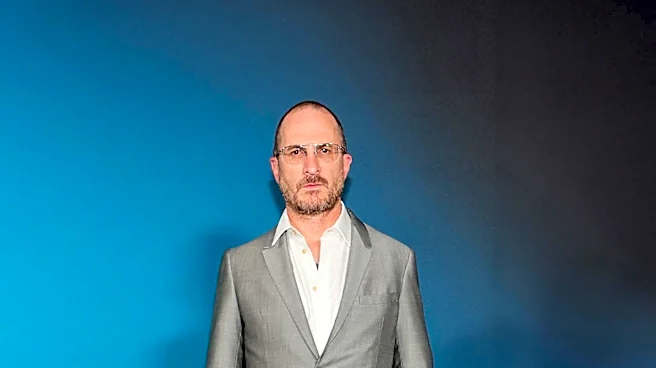
American film director Darren Aronofsky has been awarded the Director Award by the Camerimage Film Festival. The festival, celebrating its 34th edition in Torun, Poland, from November 7-14, recognized Aronofsky for his distinctive filmmaking style, which
combines formal boldness with a deep concern for human experiences. His body of work, including films like 'Requiem for a Dream' and 'Black Swan,' is noted for provoking and unsettling audiences, encouraging them to confront various aspects of human nature. The festival founder, Marek Zydowicz, highlighted Aronofsky's willingness to explore new territories, including his outspoken adoption of AI in production, a topic that remains controversial within the film industry. While the festival acknowledges Aronofsky's artistic achievements over three decades, it also anticipates discussions around his use of AI, a subject that will feature prominently in debates and workshops during the event. The festival's policy, however, draws a line at entirely AI-generated films, focusing instead on the art of cinematographers and hybrid productions where human artistic input remains central.
Why It's Important?
This recognition of Darren Aronofsky by a prestigious film festival like Camerimage underscores the ongoing evolution and challenges within the U.S. and global film industry. Aronofsky's embrace of AI in production, while controversial, signals a potential shift in filmmaking techniques and artistic expression. For U.S. filmmakers and studios, this could mean exploring new avenues for creativity and efficiency, but also raises significant questions about job displacement, intellectual property, and the definition of authorship in an AI-assisted creative process. The debate at Camerimage reflects a broader industry-wide tension between technological advancement and traditional artistic values. Stakeholders, including unions, artists, and production companies, stand to gain from the efficiencies AI might offer, but also risk losing creative control or facing ethical dilemmas. The festival's stance against fully AI-generated films suggests a desire to maintain human artistic integrity, which could influence future policy and industry standards in the U.S. regarding AI integration.
What's Next?
The discussions and workshops at Camerimage regarding AI in film production are expected to contribute to the ongoing dialogue within the U.S. film industry about the technology's role. As Aronofsky continues to explore AI, his future projects could serve as case studies for how established directors integrate these tools while maintaining artistic vision. The festival's emphasis on hybrid films, where AI assists human creators, may set a precedent for how the industry approaches AI integration, potentially leading to new guidelines or best practices. Major stakeholders, including the Directors Guild of America and the Screen Actors Guild, will likely monitor these developments closely to address concerns about job security and creative control. The outcome of these debates could influence investment in AI research and development within Hollywood, as well as shape educational programs for aspiring filmmakers, preparing them for a future where AI is a more common tool in cinematic creation.
Beyond the Headlines
Aronofsky's award and his stance on AI highlight a deeper philosophical question about the nature of art and creativity in the age of advanced technology. The festival's acknowledgment of his 'formal boldness and concern for human beings' alongside his AI adoption suggests a complex interplay between humanistic themes and technological innovation. This development could trigger long-term shifts in how audiences perceive film authorship and authenticity. If AI becomes more prevalent, the legal and ethical frameworks surrounding intellectual property and creative rights will need significant re-evaluation. Culturally, it may challenge the romanticized notion of the solitary artist, moving towards a more collaborative model that includes non-human intelligence. The discomfort Aronofsky's films often evoke, now extended to his production methods, could push the boundaries of what is considered acceptable or even desirable in cinematic art, potentially leading to new genres or forms of storytelling that blend human and artificial creativity.