





What's Happening?
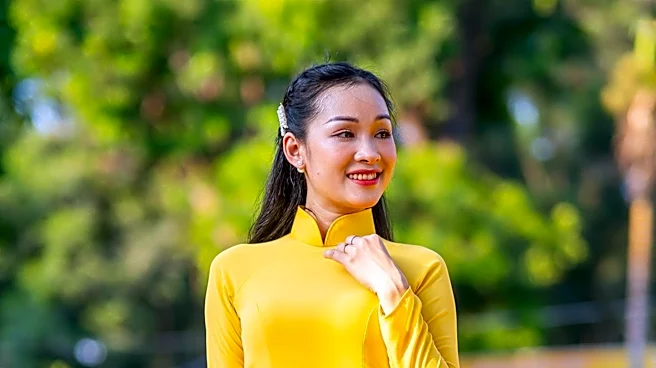
NORD AVATAR, a virtual AI model agency, is transforming e-commerce imagery in the fashion industry by utilizing hyper-realistic AI avatars. This approach allows fashion brands and creators to showcase their apparel and accessory collections without the traditional
limitations of physical photography. The company aims to replace expensive studio setups, lengthy production cycles, and logistical challenges associated with conventional photoshoots. By offering AI-generated models, NORD AVATAR provides a scalable and cost-effective solution for creating lookbooks and product images. Their mission is to democratize high-end fashion photography, enabling brands of all sizes to launch products globally with greater speed and efficiency. This innovation represents a significant shift in how fashion content is produced and distributed.
Why It's Important?
The adoption of AI avatars in fashion photography by companies like NORD AVATAR has significant implications for the U.S. fashion industry. It offers a pathway for smaller brands and startups to compete with larger enterprises by drastically reducing the costs and complexities associated with professional photography. This could lead to increased innovation and diversity within the market, as more brands can afford to present their products professionally. Furthermore, the speed and scalability offered by AI avatars can accelerate product launches and marketing campaigns, allowing U.S. fashion businesses to respond more quickly to trends and consumer demands. However, it also raises questions about the future of traditional modeling jobs and photography studios, potentially leading to a shift in employment within these sectors. The technology's ability to create diverse and customizable models could also influence representation and inclusivity in fashion advertising.
What's Next?
The trend of using AI avatars in fashion is likely to expand, with more brands and agencies exploring similar solutions. NORD AVATAR's model suggests a future where virtual fashion shows, digital try-ons, and AI-generated marketing content become commonplace. We can anticipate further advancements in the realism and versatility of these avatars, potentially leading to more interactive and personalized shopping experiences. The industry may also see the development of new skill sets and job roles focused on AI fashion design, digital content creation, and virtual model management. Regulatory bodies might begin to address issues surrounding the ethical use of AI in advertising, including transparency about whether models are real or AI-generated, and the potential impact on body image standards. The continued integration of AI in fashion will push the boundaries of creativity and efficiency, reshaping how products are presented and consumed.
Beyond the Headlines
The rise of AI avatars in fashion photography extends beyond mere cost-cutting and efficiency. It delves into deeper ethical and cultural considerations. The ability to create 'perfect' and infinitely customizable models raises questions about unrealistic beauty standards and their potential impact on consumer self-perception. While AI offers diversity in representation, it also presents a challenge to the authenticity and human element traditionally valued in fashion. The legal landscape around digital replicas and intellectual property for AI-generated content is still evolving, particularly concerning the rights of human models whose likenesses might inspire AI creations. This technological shift could fundamentally alter the relationship between consumers and brands, moving towards a more virtual and curated experience. It also highlights the broader societal trend of digitalization, where physical presence is increasingly supplemented or replaced by digital counterparts, prompting a re-evaluation of what constitutes 'real' in the realm of commerce and art.