





What's Happening?
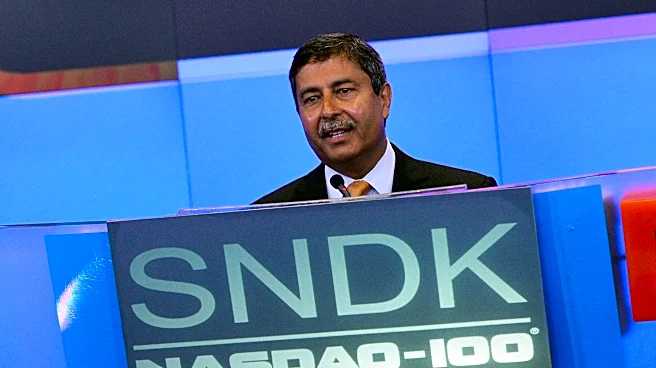
Sandisk Corporation (SNDK) experienced a significant stock decline, falling 5.97% to $73.30 on the NASDAQ. This drop occurred during a broader retreat in AI and semiconductor stocks, with the Philadelphia Semiconductor Index down 7.3% and Nvidia (NVDA)
losing 8.7%. The sell-off extends a difficult period for the flash memory maker, with its stock now approximately 75.1% below its 52-week high of $294.30, reached in June 2026. Investors are questioning the durability of returns from heavy AI infrastructure spending and reacting to proposed U.S. tariffs on 14 trading partners. Additionally, TrendForce forecasted that NAND contract prices could be flat or fall up to 5% in the first quarter of 2027 due to weaker orders from Chinese cloud providers and potential supply growth. This outlook directly impacts Sandisk's profit projections, as NAND pricing is central to its business model. Despite reporting strong fiscal Q1 2027 results with revenue of $11.031 billion and adjusted EPS of $49.51, the market is looking past current performance to future pricing risks.
Why It's Important?
The decline in Sandisk's stock, alongside a broader semiconductor sell-off, highlights investor concerns regarding the sustainability of the AI-driven demand surge and the cyclical nature of the flash memory market. Sandisk's strong revenue expansion has been largely driven by its data center segment, supplying enterprise solid-state drives to hyperscale cloud operators and AI infrastructure builders. Therefore, a shift in sentiment around AI infrastructure spending directly impacts the company's valuation. The forecast of flat to declining NAND contract prices in early 2027 poses a significant challenge, as NAND pricing is a core determinant of Sandisk's profitability. While the company boasts strong fundamentals, including high profit margins and return on equity, these are heavily reliant on favorable NAND pricing. The market's current discounting of Sandisk's earnings, reflected in a forward P/E of just 5.00, indicates skepticism about the longevity of current profit levels. This situation could lead to reduced investment in flash memory production or a re-evaluation of supply chain strategies by major tech companies.
What's Next?
Investors will closely monitor Sandisk's performance in the upcoming fiscal Q2, with management guiding revenue to $12.2 billion to $12.6 billion and pre-split adjusted EPS of $55 to $57. The key will be whether the company can meet these targets and if NAND contract pricing holds up better than the projected flat to 5% decline in the first quarter of 2027. The Weiss Ratings currently assigns Sandisk a C+ (Hold) rating, balancing strong current fundamentals against price instability in the cyclical memory business. This suggests that while the company is not a 'sell,' aggressive exposure is not recommended given the uncertainty surrounding NAND pricing. The broader semiconductor market will also be under scrutiny, particularly regarding the impact of proposed U.S. tariffs and the continued investor assessment of AI infrastructure spending returns. Competitors like Samsung, SK Hynix, and Micron could further influence the supply balance, potentially affecting future NAND pricing.
Beyond the Headlines
The current market dynamics surrounding Sandisk and the broader semiconductor industry underscore the inherent volatility and cyclicality of technology hardware markets, particularly those tied to rapidly evolving sectors like AI. While AI infrastructure demand has fueled significant growth, the market's swift reaction to potential pricing shifts and macroeconomic factors like tariffs reveals a cautious investor sentiment. This situation highlights the challenge for companies like Sandisk, which, despite vertical integration and intellectual property strengths, remain vulnerable to industry-wide pricing fluctuations. The emphasis on 'peak-cycle NAND pricing' rather than 'structural cost advantage' in the Weiss Ratings analysis suggests a deeper concern about the long-term sustainability of current profit margins. This could prompt a strategic re-evaluation within the industry, potentially leading to greater diversification of product lines or more aggressive cost-cutting measures to mitigate the impact of future pricing downturns. The interconnectedness of global supply chains and geopolitical factors, such as U.S. tariffs, also plays a crucial role in shaping the outlook for these technology giants.