





What's Happening?
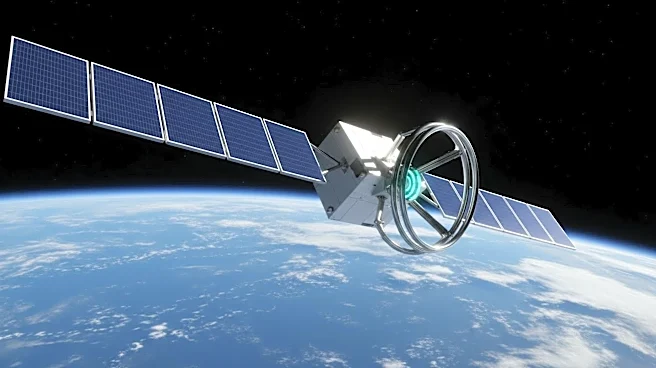
City Labs, a Florida-based startup, has launched a cubesat equipped with a nuclear-powered battery system as part of a demonstration mission. The BOHR (Betavoltaic Orbital High-Reliability) cubesat, launched on SpaceX's Transporter-17 mission, aims to
validate the use of tritium-powered betavoltaic technology in space. This system could enable spacecraft and sensors to operate independently of solar power for extended periods, particularly in environments where sunlight is scarce. The mission is partially funded by NASA and the Pentagon, reflecting interest in alternative power sources for space applications.
Why It's Important?
The successful demonstration of nuclear battery technology in space could revolutionize power systems for satellites and deep-space missions. By providing a reliable power source that does not depend on sunlight, this technology could extend the operational life of spacecraft and enable missions to shadowed regions of the moon and other celestial bodies. For the space industry, this represents a significant advancement in energy solutions, potentially reducing reliance on solar panels and conventional batteries. It also highlights the growing role of private companies in developing innovative technologies for space exploration.
What's Next?
City Labs plans to continue testing and refining its nuclear battery technology, with a potential in-orbit demonstration of a tritium-powered Radioisotope Heater Unit (RHU) in 2027. This could pave the way for operational systems designed for long-duration lunar missions. The company will need to navigate regulatory and safety challenges associated with the use of radioactive materials in space. If successful, this technology could become a standard power solution for future space missions, influencing the design and capabilities of next-generation spacecraft.