





What's Happening?
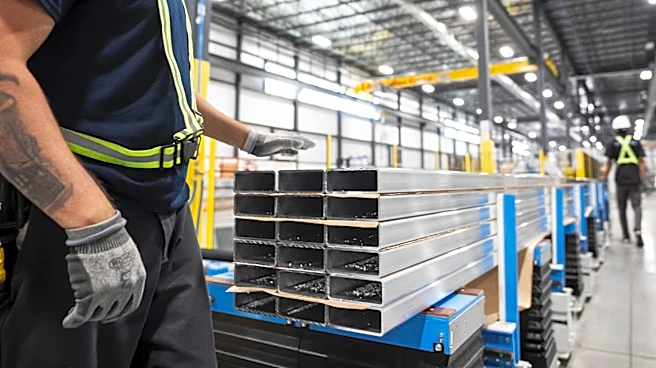
LG Energy Solution has commenced production at its new 226-acre battery manufacturing facility in Lansing, Michigan. This plant is designed to produce large-format battery cells for both electric vehicles (EVs) and energy storage systems (ESS). At full
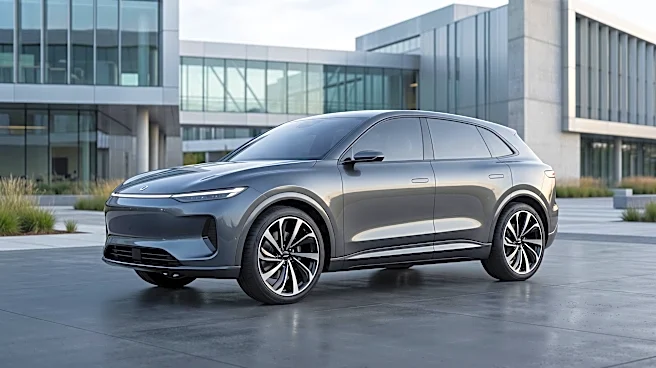
capacity, the facility is projected to achieve an annual production of over 35 GWh. The Lansing plant will manufacture lithium-iron phosphate (LFP) cells specifically for stationary storage applications, which will be integrated into complete systems by LG Energy Solution Vertech, the company's U.S. energy storage division, for utility, grid-scale, and commercial uses. Additionally, the plant will produce nickel-manganese-cobalt (NMC) cells for Toyota, which are more energy-dense and will power battery-electric vehicles such as the 2027 Toyota Highlander EV, assembled in Georgetown, Kentucky. This initiative aims to strengthen the U.S. domestic supply chain for next-generation vehicles and energy infrastructure.
Why It's Important?
The commencement of operations at LG Energy Solution's Lansing plant is a significant development for the U.S. battery manufacturing sector and its energy independence goals. By producing both LFP and NMC battery cells domestically, the facility directly addresses the growing demand for reliable energy storage solutions and electric vehicle components within the United States. This move helps reduce reliance on foreign supply chains, enhancing national energy security and economic competitiveness. The plant's output will support utilities like DTE Energy in future storage projects, contributing to grid stability and the integration of renewable energy. For the automotive industry, particularly Toyota, it ensures a more robust and localized supply of critical EV components, which is crucial for meeting domestic content requirements and accelerating the transition to electric mobility. The creation of up to 1,700 jobs at full capacity also provides substantial economic benefits to Michigan.
What's Next?
LG Energy Solution plans to significantly expand its LFP cell-making capacity in North America, aiming for over 50 GWh by the end of 2026. This expansion will involve three wholly-owned plants in Holland and Lansing, Michigan, and Windsor, Ontario, along with two joint venture facilities in Jeffersonville, Ohio, and Spring Hill, Tennessee. By the end of 2026, LG Energy Solution anticipates that 80% of its global ESS capacity will be located in North America, further solidifying the region's role in the global battery market. The Lansing plant will continue to ramp up production, supplying batteries for upcoming EV models like the 2027 Toyota Highlander EV and supporting various utility and grid-scale energy storage projects. This strategic expansion underscores a long-term commitment to building a robust domestic battery ecosystem in the U.S.
Beyond the Headlines
The establishment of advanced battery manufacturing facilities like LG Energy Solution's Lansing plant signifies a broader shift in industrial strategy within the United States, moving towards greater self-sufficiency in critical technologies. This trend is driven by geopolitical considerations, the desire to create high-paying domestic jobs, and the imperative to secure supply chains against global disruptions. The differentiation in battery chemistries—LFP for stationary storage due to its longer cycle life and safety, and NMC for EVs due to its higher energy density—highlights the evolving sophistication of battery technology applications. This strategic investment also reflects a commitment to environmental sustainability by enabling wider adoption of renewable energy and electric transportation, thereby contributing to national climate goals and reducing carbon emissions. The collaboration between international manufacturers and U.S. states like Michigan also fosters technological exchange and workforce development in advanced manufacturing.