








What's Happening?
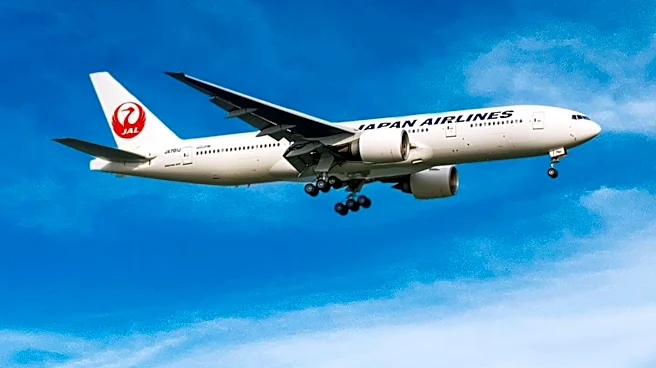
Embraer is reportedly close to securing a significant order for approximately 20 regional jets from Japan Airlines (JAL), with the E2 family aircraft favored over Airbus's A220. This potential deal would extend a nearly two-decade relationship between
Embraer and Japan Airlines. JAL's regional subsidiary, J-Air, currently operates 18 E170s and 14 E190s on domestic routes across Japan. The airline recently renewed its support agreement with Embraer for these 32 jets, covering maintenance, repair, and spare parts under the Embraer Pool Program. This renewal suggests a strong inclination towards Embraer, as airlines rarely extend support agreements with a manufacturer if they plan to switch to a rival. The E2 has seen a strong run of sales recently, including wins with All Nippon Airways, Finnair, and SAS.
Why It's Important?
This potential order is significant for Embraer as it would solidify its dominant position in Japanese regional aviation, especially if both of Japan's major airline groups, ANA and JAL, operate the E190-E2. For Airbus, losing this order would be a setback for its A220 program, particularly the smaller A220-100 variant, which has struggled to attract new customers compared to the larger A220-300. The incumbency advantage plays a crucial role, as J-Air's pilots, engineers, and planners are already familiar with Embraer aircraft, reducing transition costs due to the E2's design requiring limited additional training for crews moving from first-generation E-Jets. The decision also has historical context, as JAL had previously chosen the now-abandoned Mitsubishi Regional Jet, giving Embraer a second chance to secure the replacement order.
What's Next?
Japan Airlines is expected to make a final decision as early as October, with an announcement likely to follow shortly thereafter, potentially including options for additional aircraft. An Embraer win would strengthen its foothold in Asia, reinforce the E2's sales momentum, and deny Airbus a marquee customer in a key market. For Airbus, there is still a possibility to sharpen its offer, but overcoming Embraer's incumbency at J-Air would require a highly compelling commercial case. If the deal goes through, it would lead to deeper investment by Embraer in parts, training, and engineering support within Japan, benefiting both ANA and JAL. The replacement of J-Air's aging fleet with new-generation aircraft would also bring lower fuel burn and reduced noise, addressing important environmental and operational considerations in Japan.
Beyond the Headlines
The competition between Embraer and Airbus for regional jet orders highlights the strategic importance of the regional aviation market, particularly in countries with extensive domestic networks like Japan. The choice of aircraft often involves a complex evaluation of operational costs, passenger capacity, crew training requirements, and long-term support. The E2's design, which allows for seamless transition from older Embraer models, offers a significant advantage in terms of operational efficiency and cost savings for airlines. This decision also underscores the challenges faced by new aircraft programs, as seen with the Mitsubishi SpaceJet, and the value of established relationships and proven reliability in the aerospace industry. The outcome of this order could influence future regional jet procurements across Asia and beyond, shaping the competitive landscape for years to come.