





What's Happening?
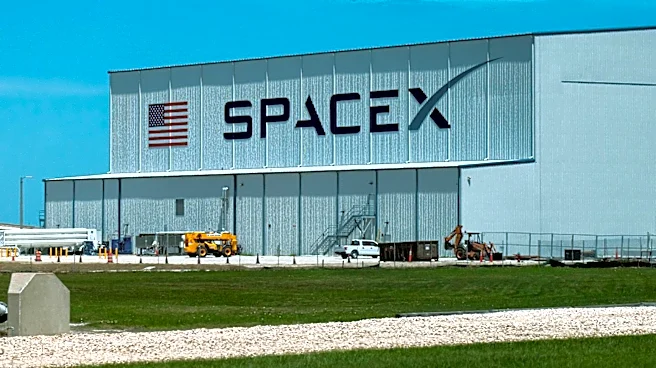
BlackRock, a U.S.-based investment manager, has acted as an anchor investor in SpaceX's substantial $44 billion GPU financing round. This significant funding initiative, which also involved Apollo and Goldman Sachs, is specifically earmarked for the development
of advanced computing capacity essential for artificial intelligence (AI) and various space-related applications. BlackRock's involvement underscores its strategy to provide cornerstone capital for large-scale private technology infrastructure projects. With a market capitalization of approximately $178.5 billion, BlackRock possesses the financial scale required to commit substantial capital to such major private deals within capital markets and alternative assets. This move aligns with BlackRock's broader focus on leveraging private markets and technology to drive higher-fee, higher-margin revenue streams, positioning itself in the growing AI infrastructure sector. The financing represents one of the largest private technology infrastructure deals to date, highlighting the increasing investment in AI computing capabilities.
Why It's Important?
BlackRock's anchor role in SpaceX's $44 billion GPU financing is significant for several reasons. It demonstrates the increasing institutional investment interest in the burgeoning AI infrastructure sector, signaling confidence in its long-term growth potential. For BlackRock, this investment reinforces its strategic narrative of expanding its private markets platform, particularly in infrastructure and private credit. By committing capital to a large-scale computing project like SpaceX's GPU buildout, BlackRock is actively putting its strategy into practice, moving beyond theoretical discussions of AI as a theme. This type of infrastructure exposure is seen by analysts as a way for BlackRock to utilize its scale, alongside peers like Blackstone or KKR, to offer clients access to complex private deals. The investment also highlights the growing convergence of space technology and AI, as advanced computing power becomes critical for both domains, potentially shaping future technological advancements and economic landscapes.
What's Next?
BlackRock's continued focus on private markets and technology, exemplified by its investment in SpaceX's GPU financing, suggests a sustained push into higher-fee alternative investments. The firm is likely to seek out similar large-scale infrastructure projects, particularly those related to AI and advanced computing, to further expand its portfolio and revenue streams. This strategic direction could lead to increased competition among major investment firms for anchor roles in significant private technology deals. For SpaceX, securing this substantial funding will enable it to accelerate the development of its AI and space-related computing infrastructure, potentially leading to advancements in its satellite internet services, rocket technology, and other ambitious projects. The broader financial market may also see a ripple effect, with more investors looking to allocate capital to companies involved in the AI infrastructure supply chain, as highlighted by the source's mention of exploring related plays across 52 AI infrastructure stocks.
Beyond the Headlines
This investment by BlackRock in SpaceX's AI infrastructure has deeper implications beyond immediate financial returns. It underscores a growing trend where traditional asset managers are becoming key players in funding cutting-edge technological development, blurring the lines between finance and tech. The sheer scale of the $44 billion financing for GPU infrastructure reflects the immense capital requirements for building the foundational computing power necessary for advanced AI, suggesting that AI development is not just about algorithms but also about massive physical infrastructure. This could lead to increased scrutiny regarding the concentration of power and influence in the hands of a few large financial institutions and tech companies that control these critical resources. Furthermore, the dual-use nature of advanced computing capacity for both AI and space applications raises questions about future technological dependencies and potential geopolitical implications as nations vie for dominance in these strategic sectors.