




What's Happening?
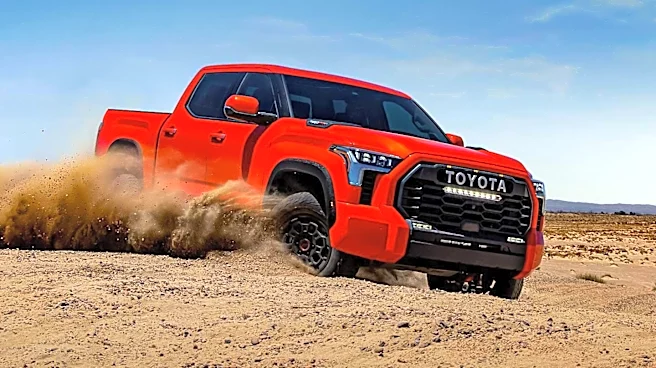
Toyota has issued a recall for approximately 62,000 non-hybrid Tundra trucks in the United States due to a potential engine problem. The recall specifically affects model year 2022–2023 and 2025–2026 Tundras. The issue stems from an improperly manufactured
engine camshaft, which could snap while the vehicle is in operation. This defect could lead to a sudden loss of power, significantly increasing the risk of a crash. According to a news release from Toyota, the affected camshafts originated from a single production lot supplied by one vendor. The automaker estimates that around 300 defective camshafts may have been installed in the recalled vehicles.
Why It's Important?
This recall is significant for several reasons, primarily concerning vehicle safety and consumer trust. A sudden loss of power while driving poses a severe safety hazard, potentially leading to accidents and injuries. For Toyota, a major automotive manufacturer, such a recall can impact its reputation for reliability and quality, which are critical in the competitive U.S. market. The financial implications include the costs associated with notifying owners, inspecting vehicles, and replacing defective parts free of charge. Furthermore, this incident highlights the critical importance of supply chain quality control in the automotive industry, as a defect from a single supplier can lead to widespread recalls and significant disruptions. Owners of the affected Tundra trucks face inconvenience and potential safety concerns until the issue is resolved.
What's Next?
Toyota plans to notify owners of the affected Tundra trucks by mid-January 2027. Owners will be instructed to bring their vehicles to a Toyota dealer for an inspection. If the camshaft is identified as potentially belonging to the affected production lot, the dealer will replace it without charge. Owners can verify if their vehicle is included in the recall by visiting Toyota.com/recall or nhtsa.gov/recalls and entering their Vehicle Identification Number (VIN) or license plate information. For additional inquiries, owners can contact the Toyota Brand Engagement Center. The company's swift and efficient handling of the recall process will be crucial in mitigating potential negative impacts on customer satisfaction and brand perception.
Beyond the Headlines
Beyond the immediate safety concerns and logistical challenges of the recall, this event could prompt Toyota and other manufacturers to re-evaluate their supplier vetting processes and quality assurance protocols, especially for critical engine components. The incident underscores the complex interdependencies within the global automotive supply chain, where a single point of failure can have far-reaching consequences. It also reinforces the role of regulatory bodies like the NHTSA in ensuring vehicle safety and holding manufacturers accountable. For consumers, it serves as a reminder of the importance of staying informed about vehicle recalls and promptly addressing any safety notices to prevent potential hazards. The long-term impact on Toyota's brand loyalty will depend on the effectiveness and transparency of its recall execution.